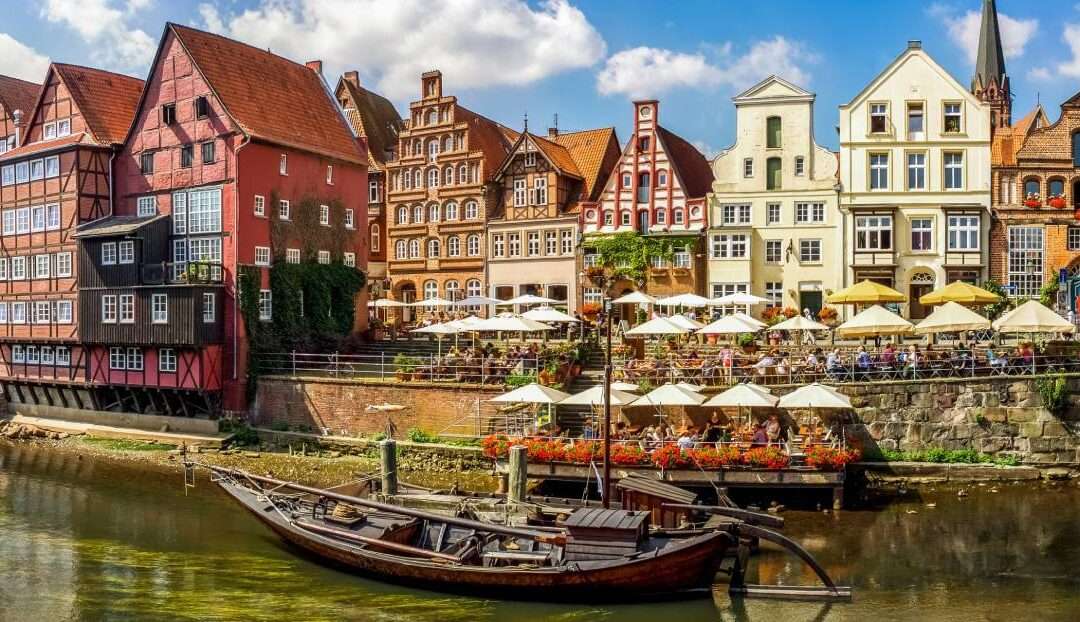
Day Trips from Hamburg

Day Trips from Hamburg

Hamburg’s Day Trip Trifecta: Because One City Just Isn’t Enough

So, you’ve conquered Hamburg—you’ve seen the harbor, you’ve braved the Reeperbahn at 2 AM, and you’ve eaten more Fischbrötchen than you care to admit. Now what? Well, lucky for you, Hamburg’s backyard is packed with cities so charming, they’ll make you forget all about your Bahn delays and questionable life choices. Just a short train ride away: Lübeck, Bremen, and Lüneburg are waiting to dazzle you with their medieval streets, fairy-tale vibes, and enough history to make your high school teacher weep with joy.

Think of it this way: Hamburg is the cool, cosmopolitan friend who knows all the best bars, but Lübeck, Bremen, and Lüneburg are the quirky, story-filled cousins who show up with a bottle of something mysterious and turn the night into an adventure. Lübeck is the sophisticated one, flaunting its Hanseatic wealth and marzipan like it’s no big deal. Bremen is the class clown, regaling you with tales of donkeys, roosters, and knights who’ve been standing in the same spot since the Middle Ages. And Lüneburg? It’s the artsy, salt-of-the-earth type who somehow makes a university town built on a medieval salt mine feel like the coziest place on Earth.

These cities aren’t just day trips—they’re your ticket to bragging rights. Imagine casually dropping, “Oh, this marzipan? I picked it up in Lübeck” or “That statue of a donkey? Yeah, I’ve rubbed its legs for good luck.” So grab your comfiest walking shoes and a sense of adventure (or at least a charged phone for Google Maps), because Hamburg’s greatest stories start where the city limits end.

Lübeck: Where Marzipan Rules and Medieval Merchants Still Flex Their Wealth
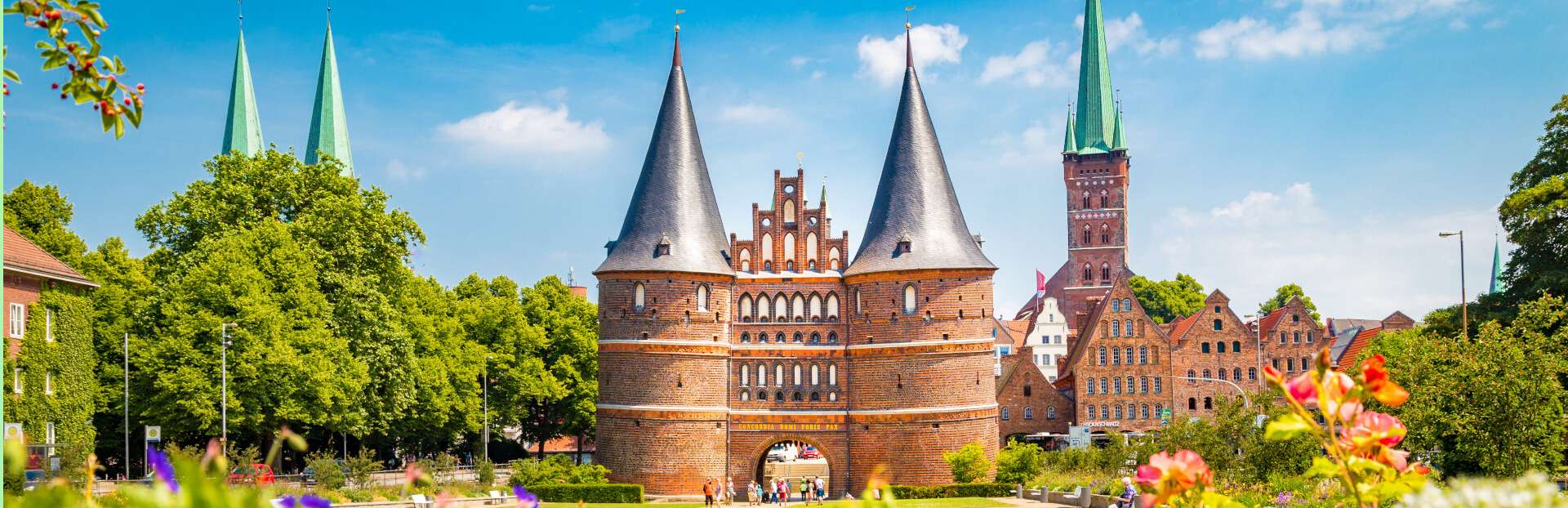
Lübeck self-guided Audio Tour with Robin and the Tourguides

The Hanseatic League’s Historical Centre: A Lübeck Walking Tour

This is the city that birthed the Hanseatic League, where the air smells like the Middle Ages—and sugar. Gothic spires, winding alleys, and just a hint of salt in the breeze: Welcome to an open-air museum where the salt is strong, the stories are stronger, and the marzipan is always the star of the show. “Queen of the Hanse,” they called it? Well, long live the queen!

If Hamburg is the cool, modern sibling, then Lübeck is the sophisticated aunt who sips tea in a castle and casually drops phrases like, “Oh, this old thing? It’s just my UNESCO-listed old town.” Once the VIP lounge of the Hanseatic League, Lübeck was the Wall Street of medieval Northern Europe—except instead of stock options, they dealt in salt, herring, and enough brick Gothic architecture to make a modern-day developer weep. Just a 40-minute train ride from Hamburg, this city is basically a time machine, minus the risk of accidentally erasing yourself from existence.

Holstentor (Holsten Gate): This is Lübeck’s version of a “Welcome” mat, if your mat was a 600-year-old fortress that screams, “We had money, we had power, and we definitely didn’t smile for photos.” Now a museum, it’s packed with medieval armor, trade goods, and the occasional tourist trying (and failing) to take a serious selfie in front of its imposing arches.

Lübeck Town Hall: Imagine if a Gothic cathedral, a Renaissance palace, and a Baroque mansion walked into a bar, had a few too many, and decided to merge into one building. That’s Lübeck’s Town Hall—a glorious architectural mashup that’s as eclectic as it is impressive. Inside, the grand halls whisper tales of merchant drama, political scheming, and probably a few questionable business deals over too much mead.

St. Mary’s Church: This brick behemoth isn’t just a church; it’s a skyscraper for the pious. Climb the tower for a view that’ll make your Instagram followers question why they’re still stuck in their cubicles. Inside, the Triumphkreuz by Bernt Notke is so dramatic, it puts telenovelas to shame.

European Hansemuseum: Ever wondered how a bunch of medieval merchants built an empire without smartphones or Excel? This museum spills the tea (or should we say, the salted herring) on the Hanseatic League’s rise to power. Spoiler: It involved a lot of ledgers, a lot of ships, and probably a lot of arguing over who got the window seat on long voyages.

Niederegger Marzipan Café: Lübeck’s answer to Willy Wonka’s factory, but with more almonds and less risk of turning into a blueberry. Watch marzipan artisans work their magic, then treat yourself to a slice of marzipan cake so rich, it might just make you forget your diet (and your dignity). Pro tip: The café’s interior is fancier than your average royal palace, so mind your manners—or at least wipe the powdered sugar off your face.

Schiffergesellschaft: This 500-year-old restaurant is where Lübeck’s elite used to wine, dine, and probably gossip about who had the best cargo hold. Today, you can feast on Labskaus—a sailor’s stew that’s basically a flavor explosion in a bowl—or Matjes, because nothing says “North German cuisine” like pickled herring at 2 PM. The oak-paneled walls have seen it all, and they’re judging you just a little bit for not ordering dessert.

Explore Lübeck Like a Pro Want to uncover Lübeck’s secrets without getting lost in its labyrinth of cobbled streets? Our self-guided audio tours in English let you explore at your own pace, from Hanseatic history to hidden marzipan stashes. Just don’t blame us if you start talking like a 15th-century merchant by the end of the day. “Verily, this marzipan is the finest in all the land!”

Bremen: Where Fairy Tales, History, and a Dash of Quirk Collide

Bremen self-guided Audio Tour

Bremen’s Old Town to the Schnoor District: A Guide to its Timeless Treasures

Get ready to squeeze through Bremen’s charmingly narrow alleyways… and don’t worry, they’re more fun than your last pair of skinny jeans! Wander through a fairy tale setting with tributes to the Brothers Grimm lurking around every corner. Whether it’s medieval treasures or stories of donkeys, dogs, cats, and roosters forming a band (seriously), this tour packs whimsy, history, and a dash of Grimm-worthy mischief.

If Lübeck is the dignified queen of the Hanseatic League, then Bremen is its mischievous, story-loving cousin. This city doesn’t just wear its history on its sleeve—it sings about it, thanks to the Brothers Grimm and a certain quartet of animal musicians. Just an hour’s train ride from Hamburg, Bremen is a delightful mix of medieval grandeur, whimsical charm, and a healthy dose of North German humor. Whether you’re rubbing the legs of a donkey for good luck or marveling at a 10-meter-tall knight, Bremen knows how to keep things interesting.

Bremen Town Hall: This UNESCO-listed gem is a masterclass in architectural show-offery. Built in the 15th century, its Gothic façade and opulent Renaissance interior scream, “Yes, we were rich—and we wanted everyone to know.” The upper hall, with its intricate wood carvings and larger-than-life wine barrels, is so impressive it might just make you want to run for mayor (or at least snap a dozen photos).

Bremen City Musicians Statue: You haven’t truly visited Bremen until you’ve seen a donkey, dog, cat, and rooster stacked on top of each other like a furry, feathered totem pole. Rubbing the donkey’s front legs is said to bring good luck—but no promises if you skip the selfie. This bronze statue, inspired by the Grimm Brothers’ fairy tale, is the city’s unofficial mascot and a reminder that Bremen doesn’t take itself too seriously.

St. Peter’s Dom (Bremen Cathedral): Towering over the market square, this 1,200-year-old cathedral is a mix of Romanesque solidity and Gothic flair. Climb the tower for a bird’s-eye view of the city, then pop inside to admire the crypts, the astronomical clock, and the occasional wedding—because nothing says romance like a church that’s older than your great-great-great-grandparents.

Roland Statue: Standing guard in front of the Town Hall, Roland is Bremen’s original giant—10 meters of stone knight holding a sword and a shield like he’s ready to take on the world (or at least a few overzealous tourists). Legend says the city will remain free as long as Roland stands. So far, so good.

Böttcherstraße: This narrow, winding street is like stepping into a storybook—if the storybook was designed by an eccentric millionaire with a love for Art Nouveau and gold leaf. Built in the 1920s, this architectural fantasyland is packed with quirky details, from glowing mosaics to a house that looks like it’s straight out of a Wes Anderson film. Don’t miss the carillon, which chimes out tunes that are equal parts enchanting and slightly surreal.

Schnoor Quarter: Bremen’s oldest neighborhood is a labyrinth of tiny, crooked houses that look like they were built by elves (or very ambitious dollhouse enthusiasts). Once home to fishermen and artisans, Schnoor is now the place to hunt for quirky shops, cozy cafés, and the perfect Instagram backdrop. Pro tip: If you get lost, just follow the scent of fresh waffles.

Explore Bremen with Ease Want to dive deeper into Bremen’s fairy-tale charm and quirky history? Our self-guided audio tours in English let you explore at your own pace, uncovering hidden stories, legendary landmarks, and maybe even a few secrets the City Musicians forgot to mention.

Lüneburg: The Quirky, Salty Soul of Northern Germany

luneburg self-guided audio tour

Lüneburg’s Old Town: A Walking Tour through the Salt Empire’s Medieval Streets

Welcome to Luneburg, where the streets are medieval, the salt was once worth its weight in gold, and some houses are sinking faster than your last souffle attempt. Stroll through Bach’s old stomping grounds, explore neighborhoods with a serious leaning problem, and uncover the salty secrets of this ancient empire. It’s history with a pinch of flavor… no shaker required!

If Lübeck is the rich aunt and Bremen is the class clown, then Lüneburg is the cool, slightly eccentric cousin who lives in a half-timbered house, studies something obscure at university, and somehow makes salt sound fascinating. Once the cash cow of Northern Europe—thanks to its “white gold” (aka salt)—this town is now a charming mix of medieval quirks, student energy, and buildings that lean more than your drunk uncle at a wedding. Just 30 minutes from Hamburg, Lüneburg is proof that the best things come in small, slightly lopsided packages.

The Pregnant House (Das Schwangere Haus): No, it’s not expecting—it’s just really, really into curves. This centuries old beauty bulges out over the street like it’s showing off a very architectural baby bump. Locals say it’s a symbol of prosperity, but we think it just had one too many salt pretzels.

Lüneburg Town Hall: This isn’t just any old town hall—it’s the oldest still-standing town hall in all of Germany, and it’s been flexing its medieval charm since the 13th century. Back when Lüneburg was basically the Beverly Hills of salt trade, the city’s bigwigs spared no expense (or brick) to build a power symbol that would last longer than your average TikTok trend. Step inside, and you’ll find a mix of grand halls, historic courtrooms, and enough old-world vibes to make you feel like you’ve time-traveled. Just don’t challenge the building to a staring contest; it’s been perfecting its “I’ve seen it all” look for over 700 years.

Medieval Crane (Kranhaus): Back in the day, this wooden crane was the original heavy lifter, hoisting barrels of salt like it was hitting the gym. Today, it’s a quirky photo op and a reminder that people in the Middle Ages had biceps of steel—and zero occupational safety regulations.

The Sinking District: No, it’s not a neighborhood for sad love songs—it’s literally sinking. Thanks to centuries of salt mining, this part of town is slowly but surely heading downward. Don’t worry, though; the half-timbered houses are still standing (mostly), and the vibe is more “charming tilt” than “abandon ship.”

St. Nikolai Church: This church is so old, it’s practically a fossil. But instead of dinosaurs, it’s packed with medieval art, a tower you can climb for epic views, and the occasional student trying to cram for exams in its quiet corners. Pro tip: If you listen closely, you might hear the ghosts of old salt merchants complaining about inflation.

Explore Lüneburg Like a Local: Want to dive into Lüneburg’s salty past and quirky present? Our self-guided audio tours in English will lead you through cobbled streets, leaning houses, and stories so wild, you’ll forget you’re in a town where the biggest drama used to be salt prices. Just don’t blame us if you leave plotting your own medieval salt empire. “First, we take the crane…”

Ready to Hit the Road?

So there you have it—three cities, each with its own brand of charm, history, and just the right amount of weirdness. Whether you’re rubbing a donkey’s legs in Bremen, stuffing your face with marzipan in Lübeck, or admiring Lüneburg’s tipsy houses, one thing’s for sure: Hamburg’s day trips are basically a choose-your-own-adventure book, minus the risk of paper cuts. These cities are close enough for a quick escape but packed with enough stories, snacks, and Instagrammable moments to make you the most interesting person at your next dinner party.

Want to dive deeper without the hassle of guidebooks or getting lost (again)? We’ve got private tours that’ll show you the highlights, the hidden gems, and maybe even a secret spot or two where the locals hide their best Kaffee und Kuchen. Check out www.robinandthetourguides.de for more info, or just book a tour and let us do the planning—so you can focus on the important stuff, like deciding which city’s dessert you love more. Spoiler: It’s always the marzipan.
Hamburg in World War II

Hamburg in World War II

From Crisis to Liberation – Traces of a City Torn Apart

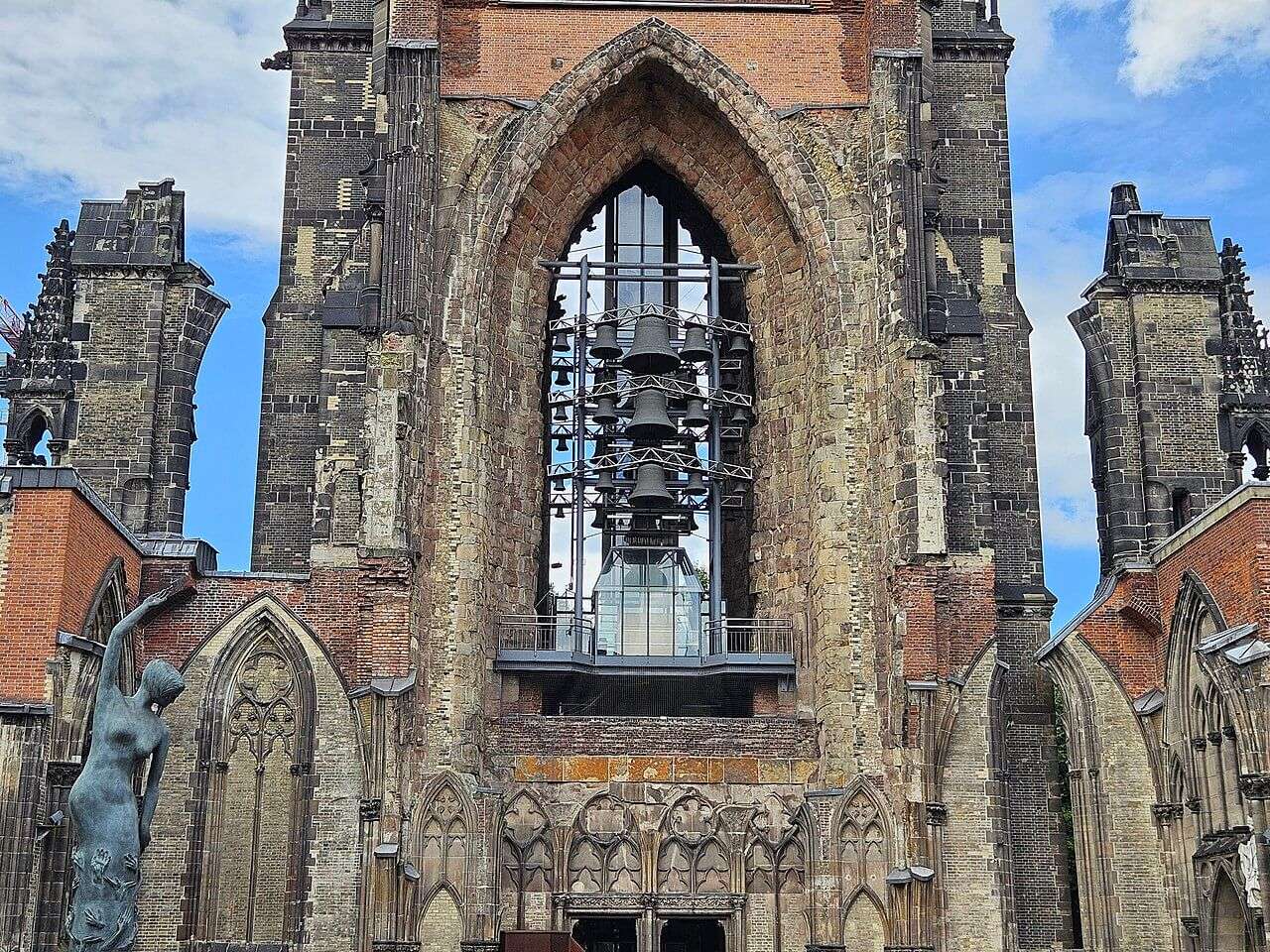
As we stood at the St. Nikolai Memorial during one of our tours, a participant once asked, “How could a city like Hamburg, full of music, trade, and Hanseatic tolerance, become a place of such destruction?” The question lingered in the air, echoing against the bomb-scarred tower that now stands as a monument of remembrance.

Hamburg’s story during World War II is not one of clear heroes and villains, but of a city struggling to survive under extreme circumstances. From the economic collapse of the 1930s to the oppression under Nazi rule, from the devastating firestorm that destroyed entire over 60% of the city, to the difficult years of rebuilding, Hamburg experienced the full impact of Germany’s darkest and most transformative decade.

Walking through its streets today, past memorial plaques, reconstructed buildings, and quiet Stolpersteine, we can still sense how the past breathes beneath the modern city. Understanding those traces helps us grasp how Hamburg fell, burned, and was reborn between 1929 and 1949.

The Great Depression and Hamburg’s Decline (1929–1933)

Hamburg was Germany’s largest port and Europe’s second busiest, after London. But when the 1929 stock market crash hit world trade, Hamburg suffered immensely. Exports fell, and industrial orders dried up. Unemployment skyrocketed: around 28 percent of Hamburg’s workforce was unemployed by 1932. In absolute terms, the number of unemployed soared from roughly 32,000 in 1928 to about 135,000 by 1932. Large working-class districts like Altona and St. Pauli saw acute hardship.

The great harbor, once vibrant, bore empty docks and stranded ships, a symbol of decline. Citizens faced hunger and poverty. Protests, bloody riots and even deadly revolts became common, as in many German cities. This hardship fueled political extremism. By 1932, the Nazi Party had become Hamburg’s largest party: it won 31,2 percent of votes in the April 1932 city elections, just above the Social Democrats’ 30,2 percent. Economic despair made many Hamburgers support the promise of radical change.

Nazi Seizure of Power – Hamburg Turns Brown (1933)

In 1933, after Adolf Hitler was appointed Chancellor on January 30, the Nazis quickly consolidated control in Hamburg. They staged mass rallies, infiltrated the press and schools, and used new emergency powers to eliminate opposition. Following the Reichstag Fire Decree in February and the Enabling Act in March, political opponents were outlawed.

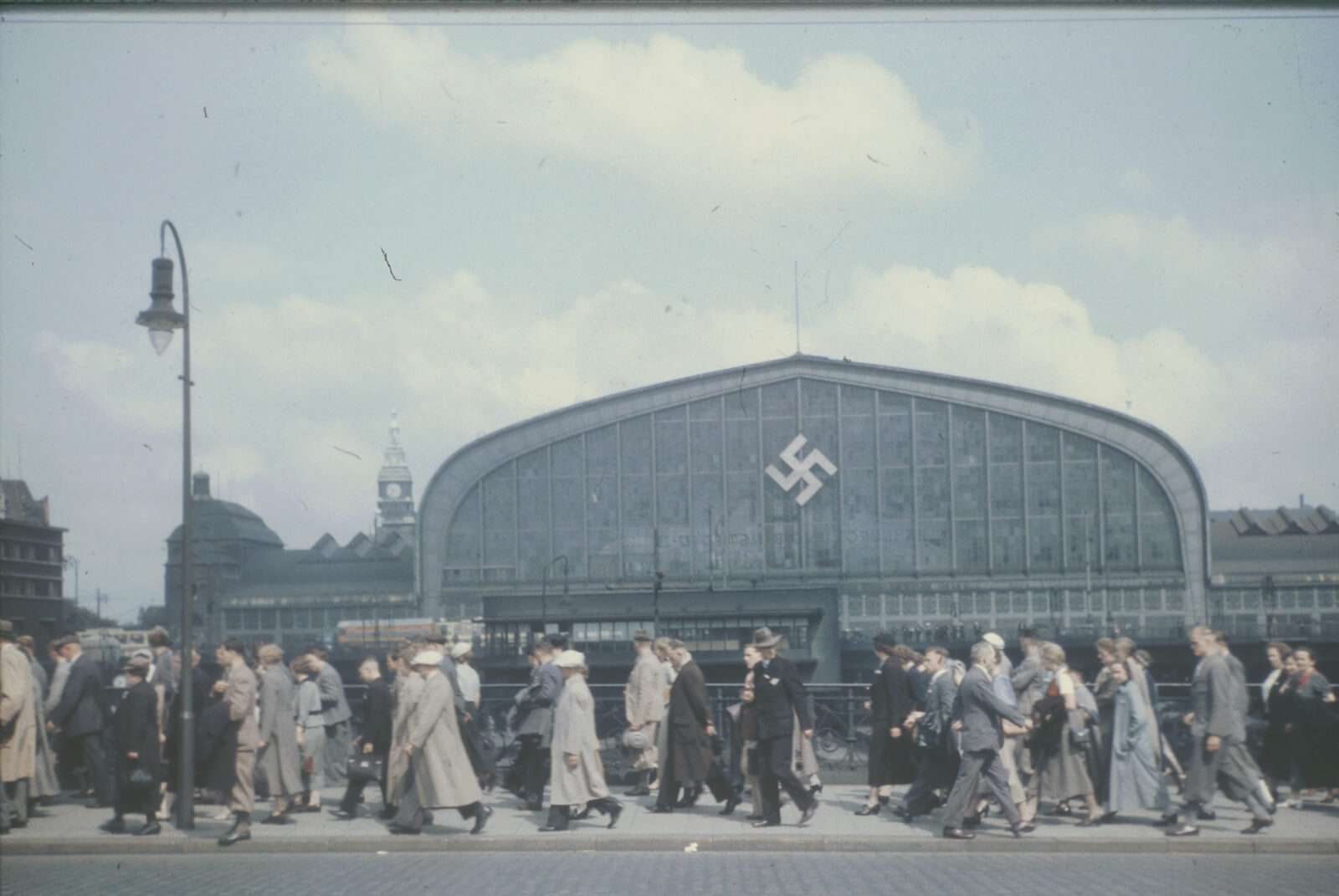
On March 3, 1933, SA units stormed Hamburg’s City Hall, seizing police and political offices. The following day, the then mayor of Hamburg Carl Wilhelm Petersen, resigned and on March 5th, 1933, the Nazi-Swastika was flown for the first time from the balcony of Hamburg’s town hall. SA leader, Karl Kaufmann, was soon installed as the city’s governor, ruling with near-dictatorial authority. The citizen elected Hamburg Parliament was dissolved, and a Nazi-dominated Senate assumed full control of the city as was justified by the then newly installed Nazi Parliamentary President: “The Senate is no longer accountable to the people”.

Repression followed almost immediately. The first Nazi arrest waves targeted Communists, Social Democrats, and trade unionists. In March 1933 alone, around 550 Hamburgers, mostly Communist leaders, were thrown into improvised jails. Old prisons and air-raid bunkers, such as the Stadtpark-Bunker and Fuhlsbüttel Prison, were turned into early concentration camps and torture sites. Fuhlsbüttel itself was converted into one of the regime’s first official camps by mid 1933. Local Nazi elites and industrialists quickly aligned with the new regime: major shipbuilders like Blohm+Voss and other firms benefited from early rearmament programs.

Everyday life changed rapidly. Nazi terror meant neighbors watched each other, and denunciations became routine. On April 1, 1933, SA men enforced a nationwide boycott of Jewish shops, humiliating Jewish business owners in Hamburg and across Germany. Hamburg’s Jewish community, one of the largest in the country, felt the new hostility immediately. Many families fled, while others were forced out in the years that followed.

Hamburg Central Station with Swastika

Kristallnacht 1938 – A Turning Point of Violence

The Night of Broken Glass erupted on November 9th, 1938, unleashing a wave of terror that would forever scar Hamburg. Nazi hordes, fueled by hatred, smashed, burned, and shattered everything Jewish in their path. Shop windows exploded into deadly shards, synagogues blazed like torches in the night, and Jewish men, women, and children were beaten, humiliated, and dragged into the abyss. Hamburg’s grand Bornplatz Synagogue, a symbol of faith and community, was violated, defiled, but spared by the flames that night only to be torn down by Nazi hands soon after, its majestic stones reduced to rubble.

The streets ran with fear as Jewish families were ripped from their homes, their businesses looted, their lives shattered. This was no spontaneous rage, it was the first massive deportation, a calculated step toward annihilation. Thousands were herded like cattle, sent eastward into the unknown. Almost none came back.

Among them was Dr. Betty Warburg, a physician from one of Hamburg’s most respected families, torn from her life in 1943 and murdered in the Sobibor extermination camp. Rabbi Joseph Carlebach, the leader of Hamburg’s Jewish school, was deported to Latvia in 1943, he was executed by the Nazis, his voice silenced forever.

Today, Hamburg bears witness. Where the Bornplatz Synagogue once stood, Joseph-Carlebach-Platz now holds a mosaic of memory, tracing the outline of what was lost. And across the city, thousands of brass Stolpersteine, tiny, brass squares embedded in the pavement, whisper the names of the vanished. Each one a life. Each one a story erased by fire, by fury, by the machinery of genocide. Walk these streets, and you walk on their names. These are the scares the city remembers and can never undo.

Hamburg as a War Machine: Arms, Concentration Camps and Forced Labor (1939–1945)

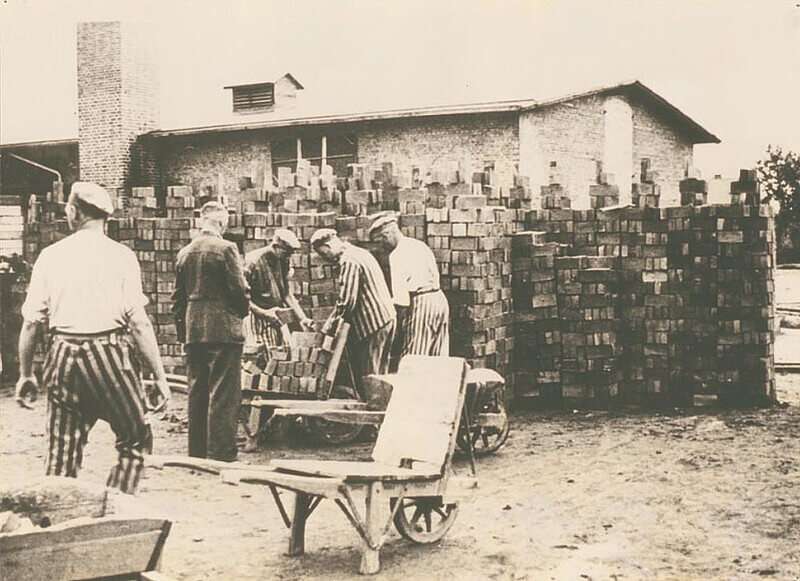
Neuengamme concentration camp workers in Hamburg, Germany
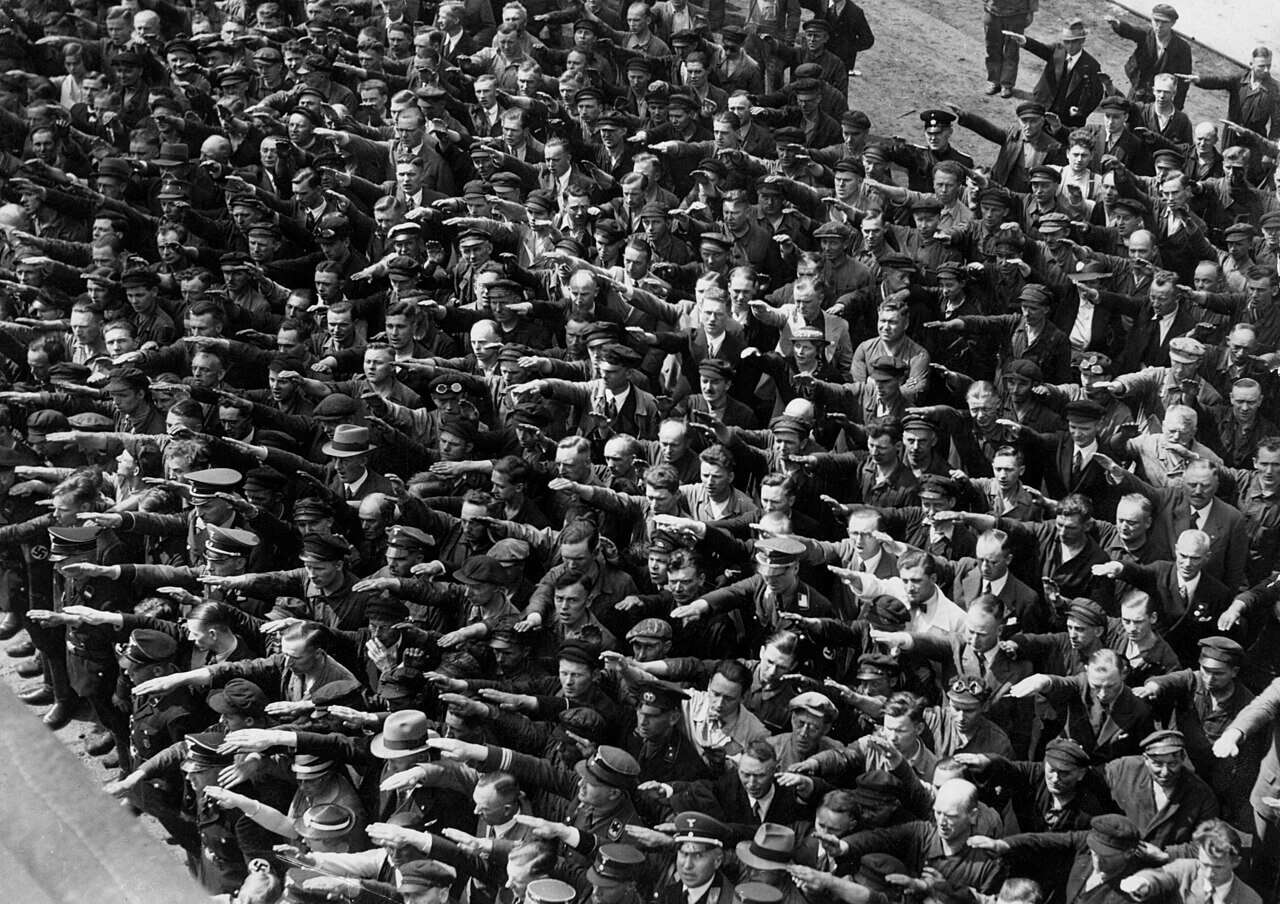
Workers at the Blohm & Voss dockyards giving Hitler salute (except for one person)

As war loomed in 1939, Hamburg’s industrial power was redirected toward weapons production. Hamburg’s darkest scar was Neuengamme, a concentration camp hidden just outside the city in Bergedorf. What began in late 1938 as a brutal labor camp soon sprawled into a monstrous network, its tendrils spreading across Hamburg through dozens of satellite camps. Over 100,000 people: political prisoners, resistance fighters, prisoners of war and Jews torn from their homes, were imprisoned within its barbed-wire confines. The Nazis had one purpose: exploitation until death. Forced to toil in brickworks and armaments factories, starved and broken, prisoners were worked to the bone, their bodies treated as nothing more than disposable tools.

The toll was unbearable. In the bitter winter of 1944–45, death claimed over 1,700 lives each month. By the war’s end, more than 50,000 men, women, and children had perished in Neuengamme’s grip—erased by hunger, disease, and the SS’s relentless cruelty.

Krystyna Razińska, one of the few who survived, later whispered of her ordeal: “God, how did I endure it all? The lice gnawing at my skin, the blood boils oozing with infection, the gnawing hunger, the beatings that left me gasping, the abuse that stripped me of my humanity. I was nothing but a shadow… hollow, unrecognizable. Perhaps I lived only because I was young, because my body had not yet been fully consumed by their evil.”

Shipyards such as Blohm+Voss, known for building the battleship Bismarck, shifted to mass-producing U-boats. Aircraft factories like Hamburger Flugzeugbau expanded rapidly, and munitions works such as Dynamit Nobel produced bombs around the clock. Every industry needed workers, yet millions of German men were serving in the army. To fill the gap, factories began importing forced laborers from occupied countries and prisoners of war on a vast scale. By 1944, approximately 500,000 foreign forced laborers and deportees were working in Hamburg’s industries. Many of these forced laborers lived in camps on the outskirts of the city. Blohm+Voss, for example, operated a camp in Steinwerder from July 1944 to April 1945.

Around five hundred mainly foreign women were imprisoned there, forced to work on warships under brutal conditions. At the Deutsche Werft shipyard in Finkenwerder, a massive U-boat bunker called Fink II was constructed between 1940 and 1942. This site also relied on forced labor, and in October 1944 a concentration camp satellite was established there. Hundreds of prisoners died from starvation, exhaustion, and Allied air raids.

One of the most chilling examples of Nazi sadism were the atrocities committed at Bullenhäuser Damm here in Hamburg under the direction of a SS doctor. Twenty Jewish children, ten girls and ten boys, aged just five to twelve, were brought from Auschwitz to Hamburg. There, they were deliberately infected with tuberculosis as part of the Nazis’ twisted quest to “prove” the supposed inferiority of the Jewish race.

The children endured unimaginable suffering: coughing up blood, searing chest pains, relentless fevers, crippling weakness, and agonizing headaches. Their torment was not just physical but a calculated act of cruelty, as the SS doctor callously accepted the risk of their deaths in the name of his monstrous ideology.

As the war neared its end, the Nazis sought to erase their crimes. The children, along with their four devoted caretakers, were hung to death in the cellar of the building. A desperate attempt to silence the truth. The SS doctor even buried the results of his experiments, hoping to conceal his horrors forever. Decades later, by sheer chance, his crimes were uncovered.

In 1966, he was finally convicted of crimes against humanity. He spent the rest of his life behind bars, but no punishment could ever atone for the lives he destroyed or the innocence he stole. The children of Bullenhäuser Damm were more than victims; they were symbols of the Nazi regime’s depravity, their voices silenced but their memory a haunting testament to the depths of human evil.

Most of Hamburg’s population rarely confronted these realities. Many citizens benefitted from wartime employment, while Nazi propaganda downplayed or concealed the existence of the camps. Some neighborhoods looked away, even when camp watchtowers stood within sight of their homes. By the final months of the war, forced labor had become an ordinary feature of city life, an irony lost on those who only noticed the empty factory floors when Allied bombers finally brought production to a halt.

Neuengamme was not just a camp; it was a factory of suffering, a place where the Nazi regime perfected the art of destruction, body by body, life by life. The ruins of those years still echo with the silent screams of those who didn’t survive.

Operation Gomorrah 1943 – The Firestorm

From July 24 to August 3, 1943, Hamburg endured the worst air raids of World War II. Under Operation Gomorrah, hundreds of British Royal Air Force bombers attacked by night, while hundreds of American bombers struck by day. British crews carpet-bombed densely populated districts with incendiary bombs, and American bombers focused their attacks on the port and ball-bearing factories during daylight hours. The combined effect created a firestorm, with overlapping fires merging into hurricane-strength winds of flame.

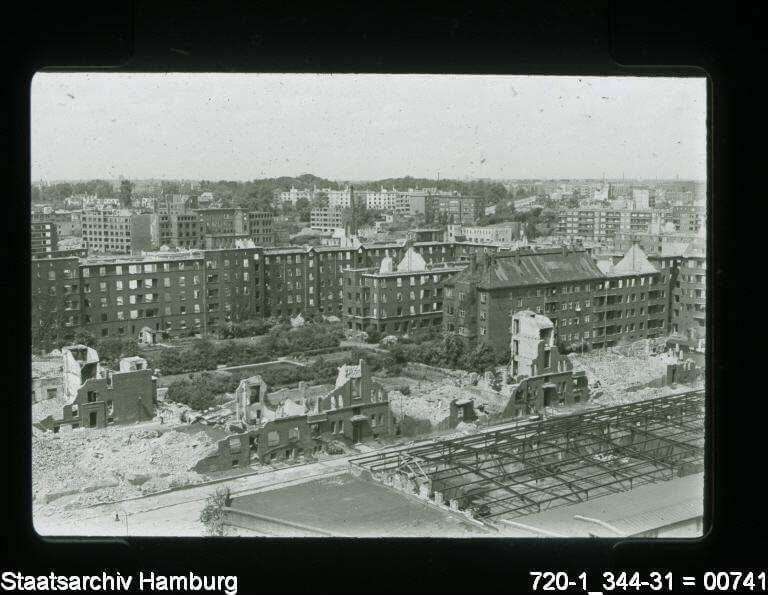
The destruction was catastrophic. Estimates suggest that between 35,000 and 40,000 people died, more than in any other German city bombing during the war. A memorial plaque near the Hammerbrook canal records that more than 35,000 people perished in the fires, including thousands of foreign forced laborers and over 5,000 children.

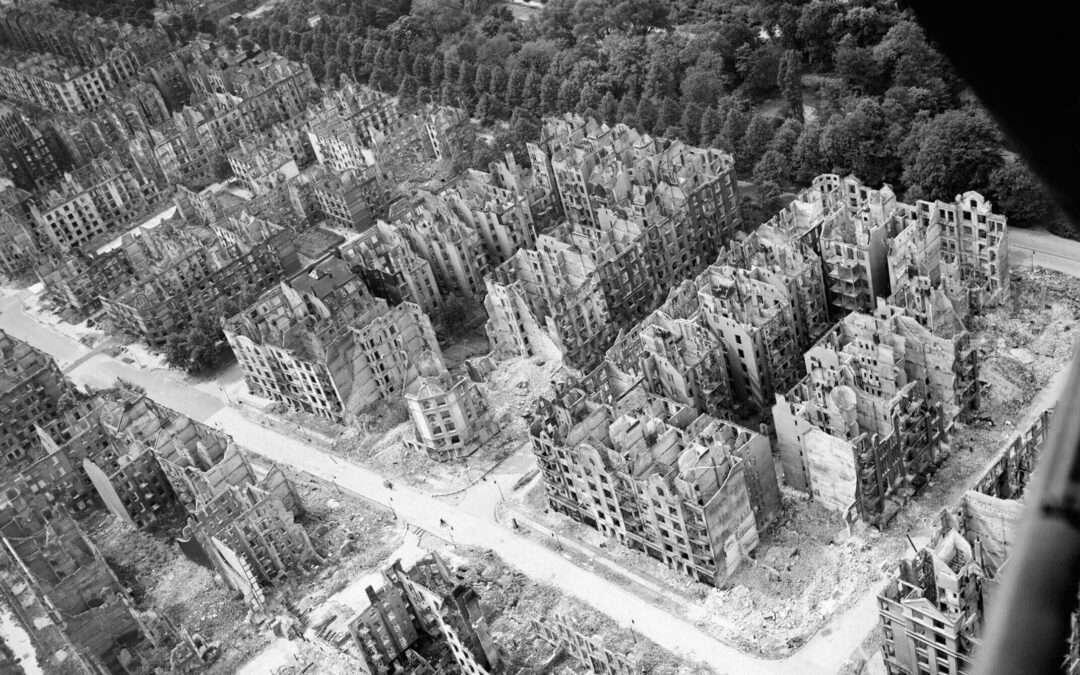
About one million Hamburg residents fled their homes in panic or were evacuated. There are stories of beer trucks driving relentlessly non-stop in and out of the city, evacuating civilians a dozen or so at a time. One survivor that came along on our tour recalled how she, a little girl at the time, spent three days in an overcrowded bunker before she was evacuated, saving her life as on the fourth night, everyone in the bunker was suffocated or roasted to death by the fire storm. By the end of the raids, entire neighborhoods such as Hammerbrook, Rothenburgsort, Horn, and Hamm in East Hamburg were almost completely destroyed by the firestorm.

Survivors woke on July 25 to see a thick orange glow hanging over the city and to breathe endless smoke. One diary described how by dawn the air was choked with embers, and survivors clawed through rubble searching for loved ones. In the following days, fire department crews, soldiers, and even prisoners from Neuengamme held in newly built local camps were forced to rescue trapped people, clear debris and chard corpses, and defuse unexploded bombs. The Hamburg firestorm left the city physically shattered and its population deeply traumatized.

Today, plaques and memorials mark the suffering endured during those days. At the main railway station, a plaque reminds visitors of Operation Gomorrah and its victims. In Ohlsdorf Cemetery, mass graves hold tens of thousands of the dead, their silent tombstones serving as somber reminders of the firestorm.

Buildings reduced to rubble in WWII in Hamburg, Germany

Liberation 1945 – Between Hope and Chaos

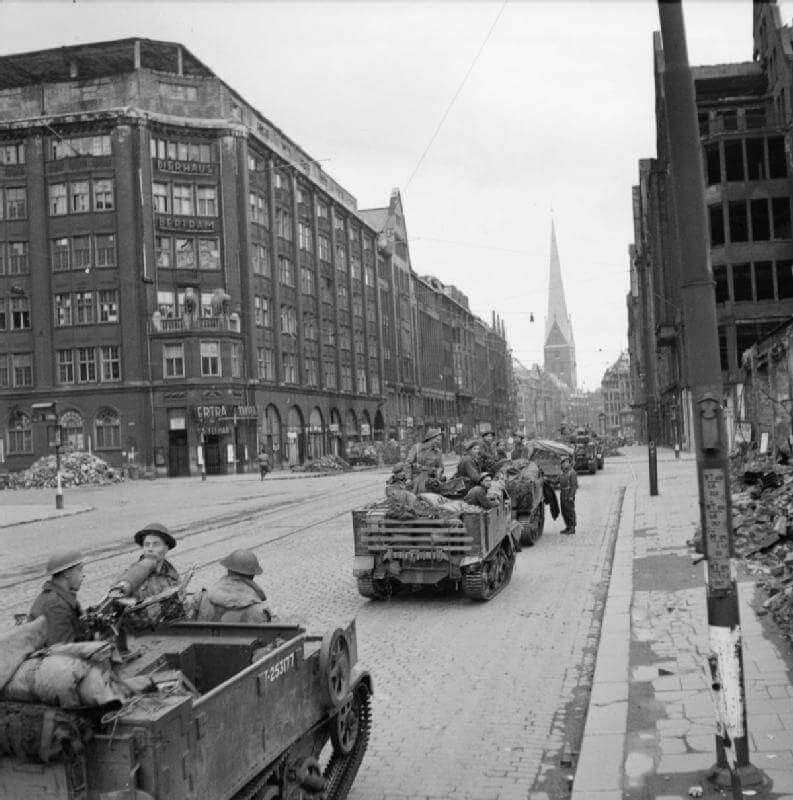
In early May 1945, with Nazi Germany collapsing, Allied forces finally closed in on Hamburg. After some last fighting, the city’s Nazi regime surrendered on May 3, 1945.

British troops marched in, greeted by a mix of relief and guilt. Many Hamburgers were astonished and asked themselves whether this was victory or defeat. Food was scarce, shelters were cold, and the city was still smoldering.

In the chaotic postwar months, daily life was a struggle. A black market flourished because official rations, often less than sixteen hundred calories per day, could not feed families. Women, known as the “Trümmerfrauen” (rubble women), cleared miles of rubble by hand to make way for reconstruction. The winter of 1946 to 1947 was harsh, with fog of debris, meager coal supplies, and populations suffering from hunger.

The occupying forces began denazification. Nazi propaganda books were banned, organizations were dissolved, and top figures were put on trial. In Hamburg, one symbolic case occurred when the Blohm+Voss shipyard directors Rudolf and Walther Blohm were brought before a British military tribunal in 1949 for trying to evade orders to dismantle the factory. Many lower-level officials faced similar tribunals in the late 1940s.

the liberation of Hamburg from the Nazis

A New Beginning: From Rubble City to West Germany

By the 1950s, Hamburg was changing rapidly. Under the motto “We build rather than beg,” the city cleared ruins at a record pace. Business associations developed what became known as the Hamburger Modell of self-help, where workers and trade unions volunteered to clear streets on Fridays, paid for by industry, then returned to their jobs by Monday.

New housing was a crucial part of the recovery. The unions’ cooperative “Neue Heimat” became Europe’s largest non-profit housing builder, creating approximately 460,000 new apartments in West Germany between 1950 and 1982. Blocks of new housing rose in neighborhoods like Barmbek and Wandsbek, providing homes for war survivors.

Economically, Hamburg rebounded strongly as West Germany’s Gateway to the World. The port resumed shipping operations, and its coal, steel, and export industries expanded during the “Wirtschaftswunder”, or economic miracle. Hamburg also grew into a center of publishing and media. The newsweekly “Der Spiegel” was founded in 1947 and developed into one of Germany’s most influential news magazines. The city’s Chamber of Commerce and ship owners, now operating in a democratic framework, energetically drove the economic revival.

However, rebuilding was not only about physical reconstruction. The memory of the Nazi era emerged slowly. In the early postwar years, many Germans wanted to forget the horrors, which resulted in silent streets and little public discussion. By the 1960s, a new generation began to ask difficult questions. In 1965, former prisoners of the Neuengamme concentration camp erected an international memorial on the camp grounds, marking a turning point in public remembrance. Over time, exhibitions, plaques, and school programs helped fill gaps in knowledge. Hamburgers started gathering at important sites such as the ruined tower of St. Nikolai church and the memorial at Bornplatz to remember the crimes committed during the Nazi regime. During the 1960s and 1970s, trials of former SS guards and police officers, although few and delayed, forced the public to confront Hamburg’s past more openly.

By the early decades of the Federal Republic, Hamburg had firmly established itself as a federal state that emphasized democracy and local freedom. Its political leaders, including the prominent Mayor Helmut Schmidt, often warned that without remembering the National Socialist past, society risked repeating the same mistakes. Schmidt famously stated that whoever does not know the past cannot understand the present. The city’s “Rathaus”, or City Hall, even served as the seat of the British occupation government until 1949, symbolizing a democratic restart.

Today, many landmarks in Hamburg still bear the scars of war and remembrance. The empty spire of St. Nikolai’s church remains as a remembrance monument for air-raid victims. The former Neuengamme concentration camp has been transformed into a sprawling memorial museum. Institutions such as the Hamburg History Museum feature extensive exhibitions covering both the Nazi era and postwar Hamburg. Despite this, many streets and neighborhoods show no outward sign of their dark history, with silent corners marked only by Stolpersteine, small brass plaques embedded in the pavement that quietly commemorate the last chosen residences of those deported or murdered during the Nazi regime.

Hamburg’s Memory Culture Today

How does Hamburg remember World War II today? Across the city, museums such as the “Museum of Hamburg History” and the “Concentration Camp Memorial Neuengamme” host permanent exhibitions that ever remind us of history’s painful scars. Schools and public programs use local history to spark conversations about racism, refugees, and integration, showing that the past still speaks to present-day challenges.

Memory here is not always simple. Debates continued over how to handle former Nazi sites. For example, the “Budge Palaise”, a villa along the Alster lake owned by a jewish family that was confiscated by the Nazis and used as offices for the gauleiter of the Third Reich, reflecting the ongoing weight of history in daily life today. After the war, the city turned the building into the Conservatory for Music and Theater. However, a full restitution for the heirs of the Budge family wasn’t resolved until 2011. One thing remains clear though: remembering is a civic duty.

If you would like to discover Hamburg’s World War II history with us. Join our guided tours that bring this intense and complex past to life, walking through memorials, and neighborhoods marked by war and rebuilding. Explore the stories behind sites like the ruins of St. Nikolai, and understand how the city remembers those dark years. Whether you are a history enthusiast, a visitor seeking deeper understanding, or someone wanting to reflect on the echoes of war and renewal, we’re ready to guide you through Hamburg’s story of hardship and hope.

Join us on a private World War II Tour or Historic City Centre Free Tour, where we bring these powerful stories to life. Visit www.robinandthetourguides.de and let the journey begin.

the St.Nikolai war memorial in Hamburg, Germany

The Beatles in Hamburg

The Beatles in Hamburg

“I might have been born in Liverpool, but I grew up in Hamburg”

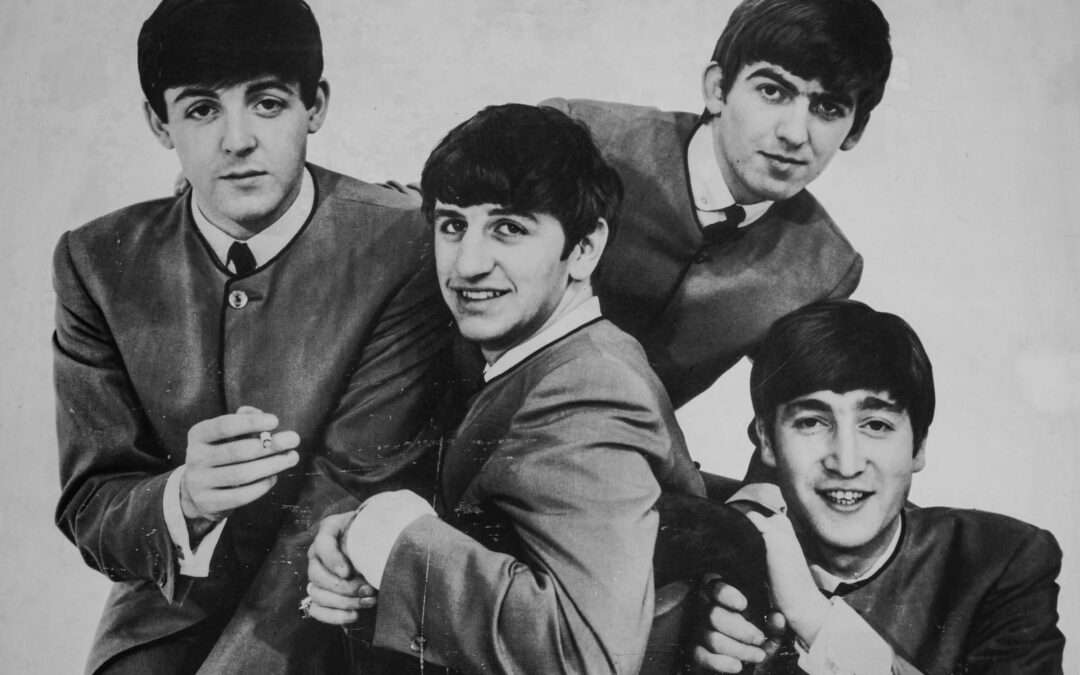
Imagine walking down the Reeperbahn in 1960: neon signs flicker, sailors on shore leave spill from the bars, the air smells of beer and cigarette smoke, and music pours out of basement clubs into the night. In that noisy, anything-could-happen atmosphere a ragged band from Liverpool arrived, still rough around the edges and hungry for work.

Hamburg didn’t simply host The Beatles… it made them. The long shifts on cramped stages, the demanding, often drunken audiences, and the city’s eclectic musical traffic forced the group to tighten their playing, expand their repertoire, and develop a tougher stage presence. Those years in St. Pauli, playing in tiny cellars like the Indra Club, the larger Kaiserkeller, and later the Star-Club, shaped their sound, sharpened their showmanship, and influenced their look: what many historians and fans now call the “Hamburg Sound.”

Why Hamburg? The city combined three things a young band needed: a wild, round-the-clock nightlife full of paying audiences; a relentless gig schedule that turned raw players into a disciplined live unit; and a melting pot of musical influences like American rock ’n’ roll and R&B records, local performers, and an international port culture, all of which gave the Beatles both material to play and reasons to stand out.

As George Harrison later reflected, “The whole area was full of transvestites and prostitutes and gangsters, but I couldn’t say that they were the audience… Hamburg was really like our apprenticeship, learning how to play in front of people.” This was no ordinary gig; it was a baptism by fire, a place where only the most resilient and talented could survive and thrive. The Beatles didn’t just play for applause; they played for their lives, in a violent, raw and aggressive atmosphere, forging the sound and stage presence that would one day conquer the world. St. Pauli’s gritty charm and relentless demand for entertainment shaped them, turning five young men from Liverpool into the legendary band we know today.

The Arrival: From Liverpool to St. Pauli

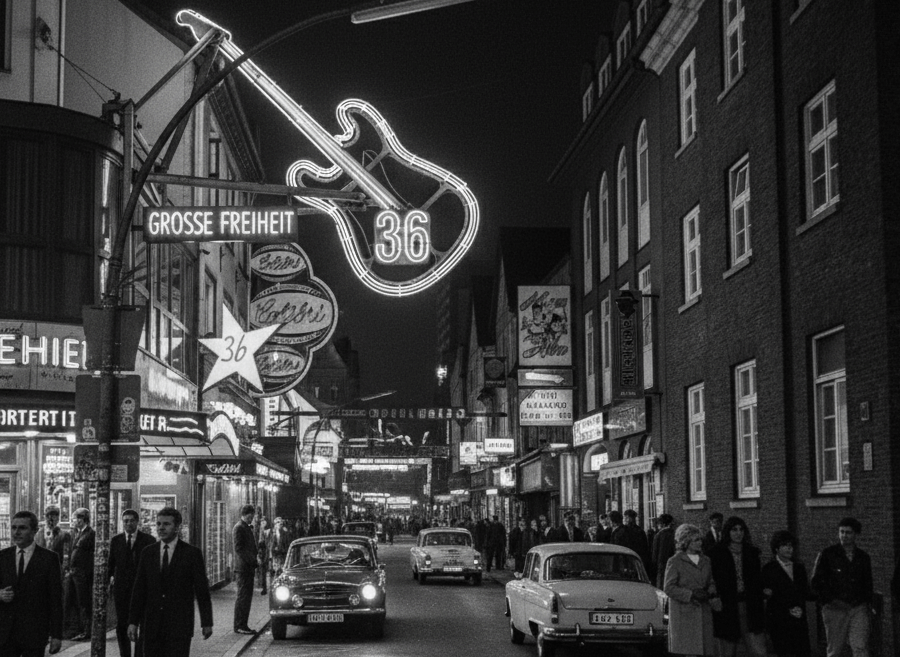
The Grosse Freiheit Street in the 1960s

In August 1960, five young men from Liverpool – John Lennon, Paul McCartney, George Harrison, Stuart Sutcliffe, and Pete Best – packed their instruments and set off for Germany. The group, who had briefly performed as “The Silver Beatles”, were booked for a residency in Hamburg through their first manager, Allan Williams, who had connections with local club owner Bruno Koschmider.

Koschmider ran several venues in Hamburg’s red-light district of St. Pauli, including the Indra Club and the Kaiserkeller in the Große Freiheit, a side street off the famous Reeperbahn. In the late 1950s and early 1960s, this area was a chaotic blend of music, neon lights, bars, and brothels, crowded with sailors and travellers from around the world. For young rock bands from Britain, it was one of the few places in Europe where they could play rock’n’roll every night and get paid for it.

Hamburg’s music scene in the early 1960s was unlike anything in Britain at the time. In St. Pauli’s small, smoky clubs, live music didn’t stop until sunrise. For The Beatles, this was both a challenge and a crash course in endurance.

They arrived in Hamburg after a long and disorganised van journey from Liverpool, complete with wrong turns and ferry mix-ups, a trip that reflected both their youthful enthusiasm and inexperience. When they finally arrived, they discovered they would be performing six to seven nights a week, often for eight or more hours each night.

Indra Club – The Beginning

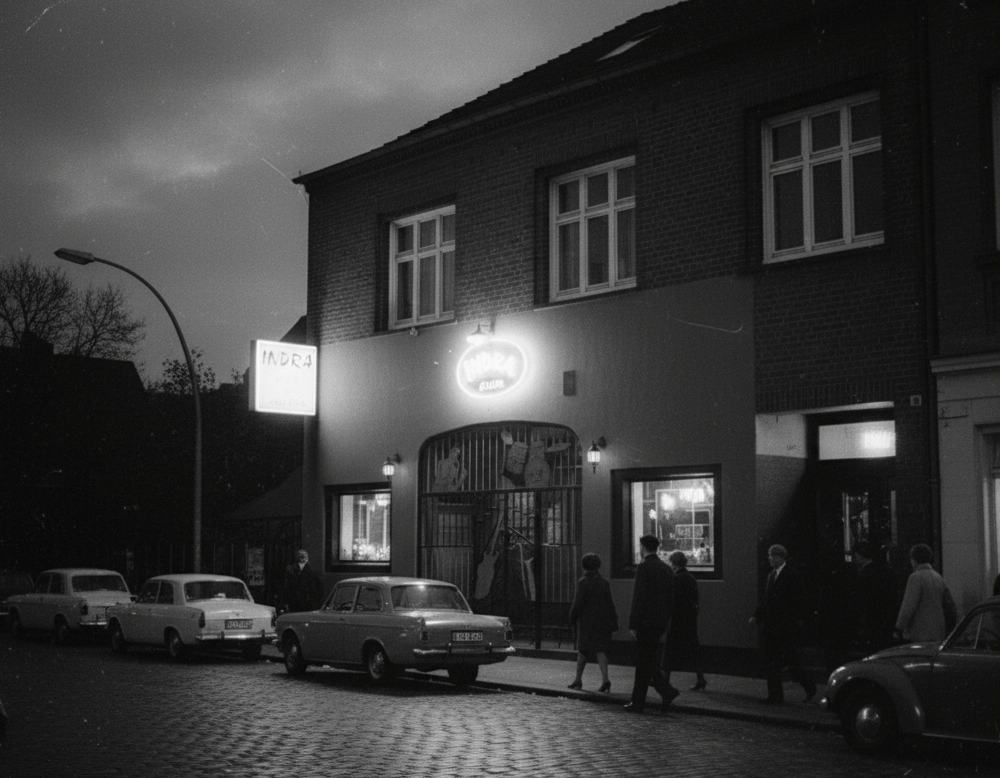
Their first stop, the Indra Club in the Große Freiheit 64, was a small and rough venue where they played to noisy, often half-drunk audiences. Many times the audience would throw their beer bottles at the Beatles and it was the bouncer’s job to catch them before they hit the band. But club owner Bruno Koschmider demanded constant energy from his performers, shouting his famous phrase “Mach Schau!” (“Put on a show!”). By the end of their Indra residency, the young Liverpudlians had developed a louder, tighter sound that stood out from other acts on the Reeperbahn.

At first they slept in a cramped, windowless back room behind the screen of the Bambi Kino, a seedy cinema just around the corner from the Indra Club. The space was barely more than a storage closet, furnished with rickety bunk beds that groaned under their weight and walls so bare and unfinished it was as if the landlord had forgotten to finish building them. There was no heating, so the bitter Hamburg cold seeped through the cracks, and the only light came from a single bulb dangling precariously from the ceiling. Showers were a luxury they couldn’t afford; instead, they washed up in the cinema’s public restrooms, splashing water on their faces in sinks meant for patrons who had just watched the latest films. To make matters worse, their makeshift dormitory was situated right next to the women’s toilet, a detail that left them feeling like they were, as they famously quipped, “sleeping in a toilet.” The stench of stale cigarettes and disinfectant lingered in the air, and the thin walls did little to muffle the sounds of the cinema’s late-night crowd or the occasional drunken brawl spilling in from the street. The constant dampness made everything feel clammy to the touch. It was a far cry from the comforts of Liverpool, but these squalid conditions became part of the Beatles’ origin story, a brutal initiation into the life of a working band. Hungry, exhausted, and often broke, they endured it all, fueled by youthful determination and the unshakable belief that this was the price of their dreams. In that grim little room, among the chaos and the cold, the band bonded in ways they never could have back home.

After several weeks, Koschmider moved them to his larger venue, the Kaiserkeller, where they shared the stage with Rory Storm and the Hurricanes, whose drummer was Ringo Starr. The crowd was tougher, the stage louder, and the hours even longer. But the competition with other British rock groups made The Beatles push themselves even harder. The young Beatles quickly earned a reputation for their energetic performances and tight sound, honed through sheer repetition and long nights on stage. Here they eventually replaced Pete Best, the first drummer, with Ringo Star, giving the band their signature rock beat.

The St. Pauli nightlife was wild and unpredictable, full of sailors, club owners, sex workers, and restless youth. The band learned to adapt fast, reading audiences and surviving in a city that demanded both stamina and attitude. It was in this chaotic environment that The Beatles grew from an amateur group into a professional live act capable of commanding any stage.

In April 1961, The Beatles left Koschmider’s management and began performing at the Top Ten Club, managed by Peter Eckhorn. This change marked a turning point: better pay, improved conditions and equipment, and more musical freedom. It was during this period that they began backing British singer Tony Sheridan, resulting in their first professional recordings, including “My Bonnie”. These sessions, produced by Bert Kaempfert and released on the Polydor label, gave them their first taste of the recording industry.

The Indra Club in Hamburg, Germany

The Friends, The Chaos, and The Stories That Shaped The Beatles

Hamburg wasn’t just a city where The Beatles played, it was where they found a second family, a circle of friends and characters who shaped their sound, their style, and even their sense of humor. One of the most influential figures in their early days was Astrid Kirchherr, the striking photographer and girlfriend of Stuart Sutcliffe, the band’s original bassist. Astrid’s artistic eye captured some of the most iconic early images of the Beatles, her black-and-white portraits giving the world its first glimpse of the raw energy and charisma that would soon define them. But her influence went beyond photography: it was Astrid who led the band to a tiny barbershop on the Davidstraße, Salon Harry, where they traded their greaser pompadours for the now-legendary “mop-top” haircuts, a look that would become synonymous with the Fab Four. Her connection to the band was deep, especially with Stuart, whose decision to leave music for art in 1961 marked a turning point in the Beatles’ evolution.

Then there was Gerry Marsden, lead singer of Gerry and the Pacemakers, who shared the stage and plenty of wild nights with The Beatles. One infamous story involves Gerry and John Lennon venturing into the notorious Herbertstraße, Hamburg’s red-light district, for John’s first (and last) encounter with a prostitute. As Gerry later recounted, they negotiated a price with a pimp, only for the woman to arrive—half-dressed and, in Gerry’s words, “the size of a bus.” Panicked, both bolted from the brothel without a second thought, leaving their money behind and never daring to return.

No tale of the Beatles in Hamburg would be complete without Horst Fascher, the burly bouncer at the Indra Club who later became the manager of the Star-Club. Horst was the kind of no-nonsense protector the band needed in the rough-and-tumble world of St. Pauli. His memoirs are filled with original stories, including the time he caught John Lennon in a tête-à-tête with a female fan just before a show in the restroom. To snap John out of his distraction, Horst dumped a bucket of ice-cold water over him. The result? John stormed onstage dripping wet, wearing nothing but his underwear and a toilet seat around his neck and played the entire set that way. (Want the full story? Come along on one of our tours!)

There were others, too: Klaus Voormann, a young artist and bassist who became a lifelong friend, designing the cover for Revolver and playing on solo records for John, Paul, and George. And let’s not forget Jürgen Vollmer, a photographer and friend who helped shape their image, or Tony Sheridan, the musician they backed on their first professional recordings. These friendships were more than just footnotes, they were the foundation of the Beatles’ Hamburg chapter, a time of chaos, creativity, and camaraderie that would follow them long after they left the Reeperbahn. The city’s gritty charm and the people they met there didn’t just influence their music; they helped turn five scrappy lads from Liverpool into the band that changed the world.

Star-Club – The Peak of the Hamburg Years

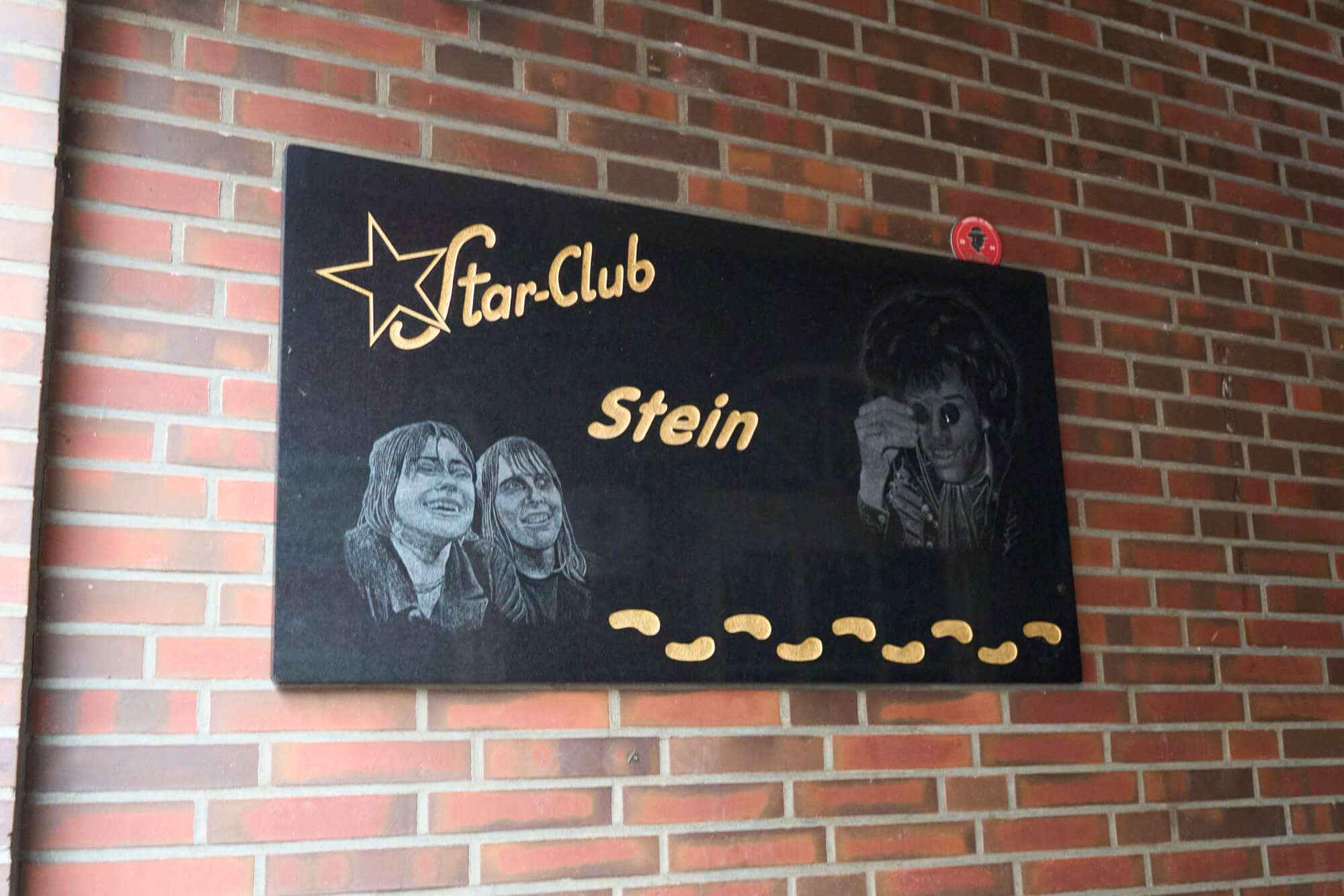
The former site of the Star Club in Hamburg Germany

When the Star-Club opened in April 1962, it quickly became Hamburg’s premier rock’n’roll venue, hosting international acts like Little Richard, Jerry Lee Lewis, and Gene Vincent. The Beatles returned for several engagements between April and December 1962, already on the verge of fame in Britain.

Their performances at the Star-Club were later described by witnesses as electric: confident, polished, and far more professional than when they had first arrived in 1960. In many ways, this was the culmination of their Hamburg apprenticeship. By the time they left Hamburg for good, The Beatles had logged more than 250 nights of live performance and over 1,200 hours on stage in just over two years. These relentless shows didn’t just make them better musicians; they transformed them into one of the tightest live bands in Europe.

The Sound of Hamburg

During their Hamburg residencies between 1960 and 1962, The Beatles’ music evolved at lightning speed. Surrounded by American rock’n’roll, rhythm & blues, and local skiffle and jazz, they expanded their repertoire from simple covers to complex harmonies and tight arrangements. They learned to perform as a unit: loud, raw, and confident.

But not all of The Beatles’ Hamburg adventures were on stage. In November 1960, German authorities discovered that George Harrison was only 17 years old and therefore too young to perform legally in the clubs. He was promptly deported back to England.

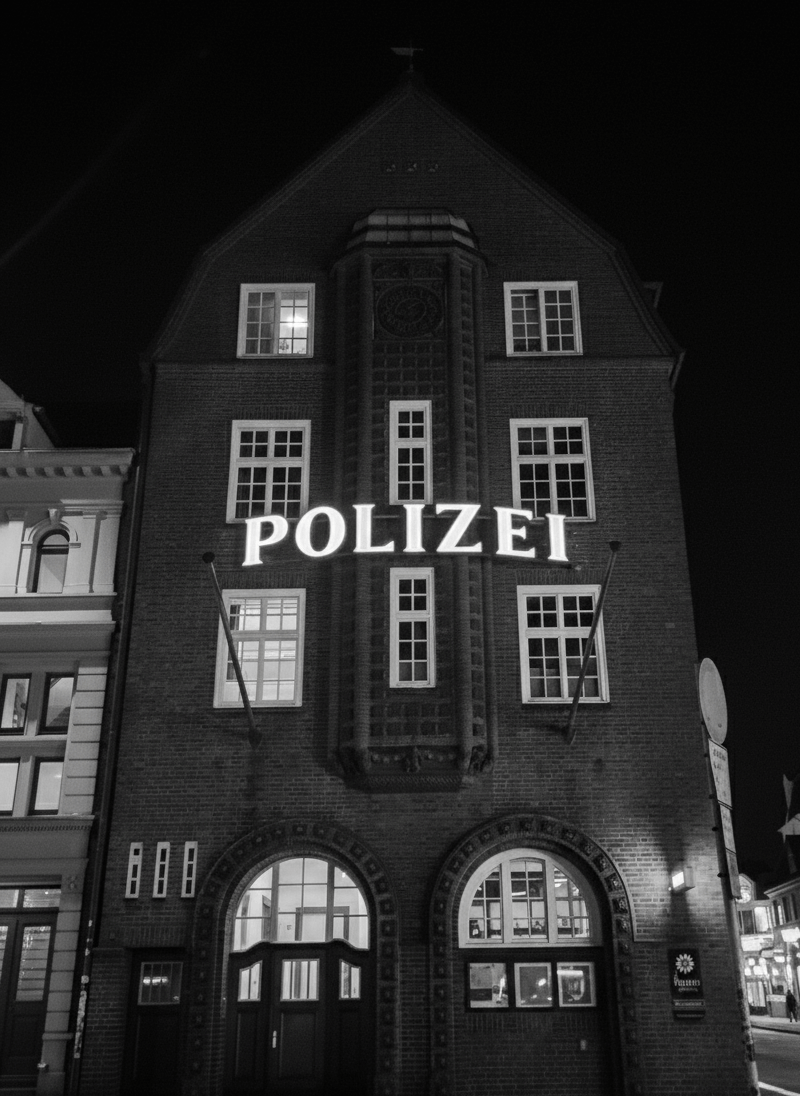
Soon after, Paul McCartney and Pete Best were arrested after a small fire broke out in their Bambi Kino room. The result of burning a condom and former contract from Bruno Koshmider as a prank after tensions with him. They spent a night at the Davidwache police station before being deported as well. Despite these setbacks, the group returned several times between 1961 and 1962, each time stronger, more disciplined, and more determined.

Many of The Beatles’ earliest hits were shaped in the clubs of Hamburg. Songs like “I Saw Her Standing There,” “Love Me Do,” and “Twist and Shout” were refined through endless live performances long before being recorded. The constant repetition and audience feedback sharpened their sound and timing.

The band also made humorous attempts to connect with their German audiences. Later, in 1964, they even recorded two songs in German: “Komm, Gib Mir Deine Hand” and “Sie Liebt Dich”, a nod to the country that had helped launch their career.

The David Watch police station in Hamburg, Germany

Hamburg’s Enduring Beatles Legacy

The Hamburg years were crucial. The Beatles arrived as a local Liverpool act and left as a professional, internationally seasoned band. And the city never forgot them.

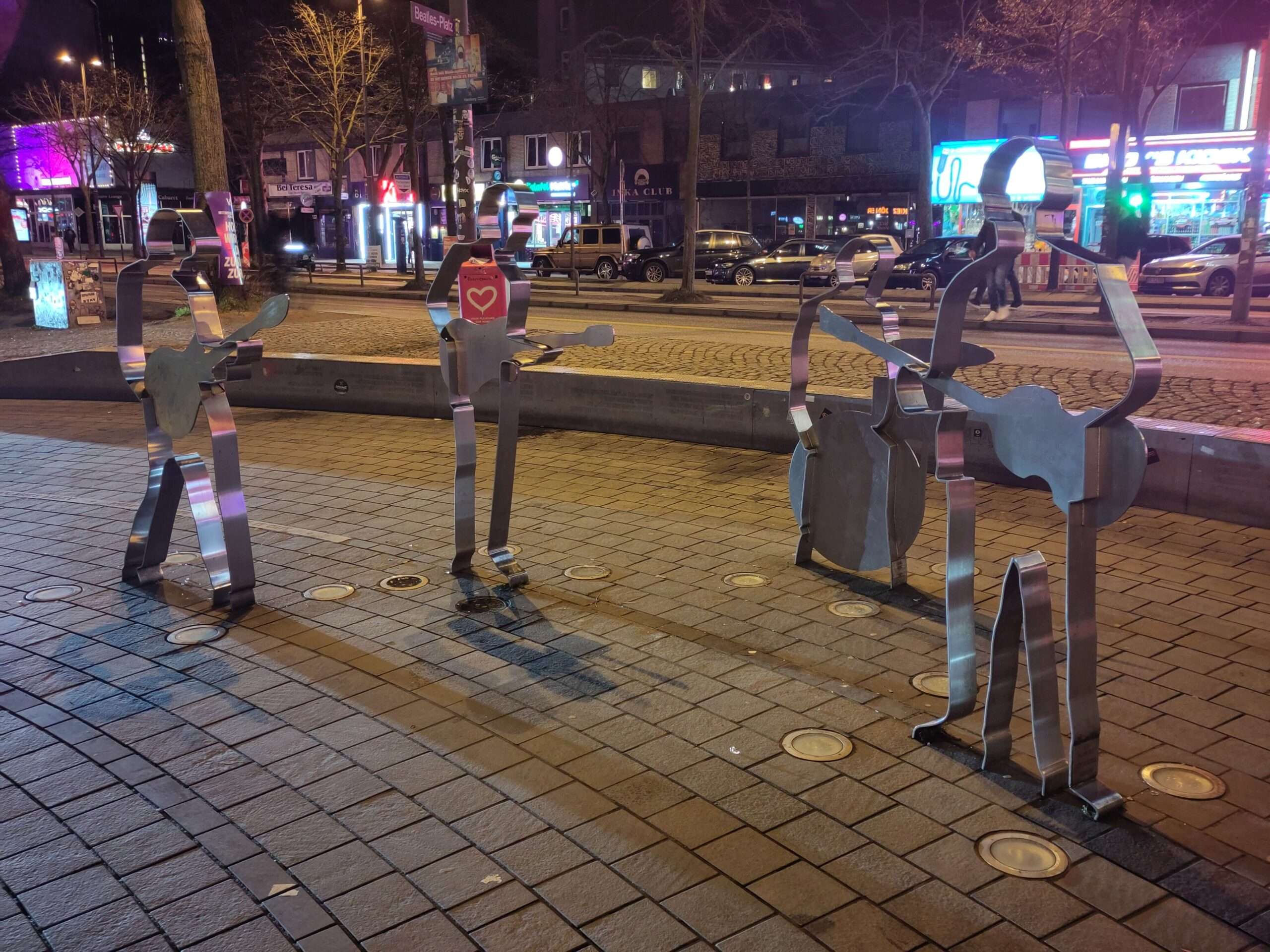
Today, Hamburg still proudly celebrates its place in Beatles history. On the Reeperbahn, the circular Beatles-Platz features life-sized steel silhouettes of the five original members, positioned near the sites where they first played. Visitors can still see the Indra Club, Kaiserkeller, and the Star-Club’s former location, as well as the Davidwache police station and Bambi Kino, where the Beatles’ story truly began.

Liverpool gave The Beatles their roots. Hamburg gave them their wings. Here they learned endurance, stage presence, and the raw discipline that later fuelled their global success. Hamburg’s influence can be heard in their sound and seen in their attitude. The city’s rough energy shaped not only The Beatles, but the entire British Invasion that followed.

You can walk in the Beatles’ footsteps every day with us! Join Robin and the Tourguides on our Harbour & St. Pauli Free Tour, where we bring these wild, wonderful stories to life as we explore the streets that made the Fab Four. Or, if you’re a true Beatles devotee, dive even deeper with a private Beatles Tour, designed for fans who want the full, unfiltered Hamburg experience.

So whether you’re here for the music, the history, or just the sheer joy of standing where legends once played, we’re ready to show you the magic and the mayhem of the Beatles’ time in Hamburg. Visit us at www.robinandthetourguides.de and let the adventure begin.

Beatles Square in Hamburg, Germany

Why You Should Take a Free Tour with Robin and the Tourguides

Why You Should Take a Free Tour with Robin and the Tourguides

In the past years, many travelers have gained a deep appreciation for free tours throughout the world. They love the concept and motivation of the companies and guides that lead them through new and exciting cities. However, there are many companies out there and not all of them have the best reputations and practices. It can be difficult sometimes to discern which company to choose from as well as factors of quality, reliability and sustainability. That is why we feel it is important to highlight the main reasons why you can’t go wrong with a tour with us, Robin and the Tourguides.

Great Way to See and get a Good Overview of what the City has to Offer

We offer two free tours of the city: the Historic City Centre Tour and the Harbour & St.Pauli Tour. Both are completely different from each other and offer great overviews of the different districts in the city.

Our Historic City Centre Free Tour focuses on the main sight-seeing spots here in the inner city and delves into the history of how Hamburg became what it is today. From the early fortifications of the Hammaburg to the early twentieth century ports, you will discover this city’s rich history while seeing the main attractions.

Our Harbour & St.Pauli Free Tour focuses on the more modern up-to-date aspects of the city. From the container ports and ferries to the alternative, red-light and party district here in the city.

On both tours, you get a great insight of things to do, places to enjoy some local cuisine, great photo opportunities and personal anecdotes into Germany’s largest port city. You will definitely have a lot of recommendations for after the tour for activities and places to visit!

Nr. 1 Rated Tour Operator in Hamburg

We here at Robin and the Tourguides give a lot of care for the quality of our guests’ time while on our tours. We ensure that the guides have a deep understanding and connection with the city.

Many times free tour companies are associated with maybe exchange students or expats that haven’t been living in the local community for a long time. This is not the case with us. Our guides know the city very well and love to show the city to their guests. They have also passed a quality certification exam from us and have a deep knowledge of the city. They are experienced and professional tour guides that will do their best to take care of you on the tours!

This is very well reflected in our vast number of high quality reviews and feedback from our guests. In fact we are rated the nr. 1 tour operator in all of Hamburg by TripAdvisor for the past several years now*. We also enjoy a perfect 5 star google rating* from over 1,300 customer reviews*! So why risk it going with another free tour operator that maybe doesn’t have as high standards as we do?

*(as of 14.12.2022)

No Matter your Budget you can Come Along on a Free Tour

One great thing about us is that we truly believe that everyone should have a great time here in our city no matter what their budget is. Even if you are a Backpacker, student, traveler on a shoe-string budget, free tours allow everyone to come along and enjoy the city. We, of course, realize that everyone has hard times sometimes and don’t believe in excluding people based solely on their socioeconomic status. That is why we offer free tours.

Will some people take advantage of this concept?… Of course, but we have noticed overall, people are decent and honest people. Those that can afford to pay what they think it is worth tend to do so which makes up for those that can’t.

Please note though, that groups of 8 or more people will not be allowed on our public free tours. This is so as not to overwhelm our guides and other members of the group with unexpectedly large groups. We kindly ask that groups of 8 or more book a private tour with us.

No Hidden Sponsoring or Sales Pitches

When traveling to other countries many people take tours and halfway through they are bombarded with a stop at maybe a company that highly encourages them to buy souvenirs or gifts from them. Many times with free tour companies they might also make a stop at a cafe to push their guests to buy paid tours that they offer later. Mandatory stops are also many times made at cafes or restaurants where the guests are encouraged to buy food or drinks while the tour company cuts a commission from the cafe or restaurant for every sale they make despite the quality. We here at Robin and the Tourguides do not believe in this practice.

We don’t have any hidden sales intents or commissions we get from stopping at certain places. Of course, if it is very cold in winter or very hot in summer, our guides will often offer the group a nice cafe to get some refreshments or to warm up a bit, but because we don’t have hidden arrangements this allows the guides the freedom to stop at really great local and maybe small hidden places that are a lot better than chain cafes or franchises such as Starbucks. Our guides have the flexibility to go to the places they really feel comfortable with and think you deserve as a guest to really get to experience the true Hamburg feeling.

Meet other Travelers

Traveling many times is a great adventure and opportunity to discover new places and cultures, making great memories and meeting new people. However, especially for lone travelers, breaking the ice or having the opportunity to meet new people in a city you don’t know can be intimidating and sometimes overwhelming.

There are countless examples of people meeting and discovering a new city together on free tours. Many times it is not uncommon to hear of such great friendships that travelers decide to travel together or meet up in other cities or even their hometowns.

On free tours, people meet a lot of other enthusiastic travelers to share and exchange their personal travel experiences with. You can get a lot of great tips from other travelers about where to go next on your journey or what to watch out for.

Also, it is great to spend some time with others in the evening together in a maybe a nice bar or restaurant and planning activities together with others that are still anxious to discover the local scene. Free Tours allow for you to make connections with others to plan for some great interactions!

We are a Local Company and Support the Local Community

Evermore, with free tours, there are conglomerates of multinational companies that are on a mission to expand to every major city in the world. These companies are usually highly influenced in maximizing their profits from mass tourism on the backs of their workers and guides. The owner usually sits in New York or London and has little direct knowledge of the other cities his company does business in and relies often  heavily on low paid City-Managers or regional managers, usually who are desperate students, to manage several cities or countries… all the while making a hefty profit from their exploitative practices.

Robin and the Tourguides believes in giving their employees, guides and partners a living wage with respectful and fair conditions. We are a truly local company and will stay that way. We are based in Hamburg and only offer tours in Hamburg. This means our taxes also go to the city and don’t wander off to tax havens or other dodgy countries.

Our Partners are also locals businesses and not just franchise chains that are based in other countries. This means we support local entrepreneurs and small businesses helping the local economy and offering a more personal experience for our guests.

We also believe in self-empowerment for our workers and were founded by guides themselves. We are still managed and run by guides that call Hamburg their home. This allows for a much better understanding and ability to adapt to the local tendencies and an incredible flexibility to care for the needs of our customers in a responsible and sustainable way. We are just not a cookie cutting, one-size-fits-all company copying their free tours and cheap pub crawls all over the world.

We are also a proud member of the Free Tour Community and the local Tourism Association of Hamburg (Tourismusverband Hamburg e.V.). The Free Tour Community is a non-profit organization of independent and local free tour operators from all around the world with excellent reviews. For more information you can visit their website at: www.freetourcommunity.com .

Reliability

We have also noticed over the years that many companies open tours here in the city and just don’t show up to the meeting point. With us you can be certain that we will be there with our yellow umbrellas for the tours!

We Believe in Sustainability

We are a company that strongly believes that everyday actions have a big impact on the world around us and are willing to act responsibly for our environment. From everything to using 100% renewable energy for our office actions, co2 neutral Flyer printing, sustainable banking with the GLS Community bank (Germany’s first ecological bank), to yearly donations to charities, we do our best to preserve the wonderful planet that we all want to explore!

Also, our free walking tours are the most sustainable way of seeing a city. So instead of taking a diesel double-decker bus or an exhaust blustering cruise ship feel free to come along on a walking tour with fresh air and a little bit of exercise for the environment and health.

Our Tours are Fun!

Not only are our free tours a great way to get to know the city but they are also really fun and entertaining! We all know the feeling of paying for a normal tour and having to listen 2 or 3 hours to maybe an elderly professor reciting a memorized script of the city as if it were interesting. Our free tours are not like that at all! We don’t, for example, have scripts that our guides learn by heart. Our tours are individual to every guide and often no two tours are the same.

Our guides are highly motivated to give you a great experience here in the city because if you don’t like the tour, let’s be honest, you probably won’t want to give them a rewarding pay at the end. The free tour concept is just too rewarding for the guides to give fond and memorable experiences for the guests each and every tour!

Top Free or Almost Free Things to do in Hamburg

Top Free or Almost Free Things to do in Hamburg

Hamburg is one of the most expensive cities in Germany. It is also known for its many attractions for tourists and locals alike. Many people think that you have to allocate a substantial amount of money for a trip to Hamburg to have a good time, but as many insiders will tell you, Hamburg also has a lot to offer for those traveling on a shoe-string budget. Here are our top free activities to enjoy while here in the beautiful city of Hamburg!

Free Tours with Robin and the Tourguides

If you are looking for a great opportunity to get an overview of the city go on the free tours from Robin and the Tourguides. We offer two free tours of the city, one through the historic city centre and another through the harbour & St.Pauli district. The two tours are completely different from each other and offer different views of the city. Discover the beginning of Hamburg’s rich history and how it became what it is today and in the afternoon learn of the economic power-house of the city, the ports. Also, delve into the night life and hear of how St.Pauli, the red-light and party district, is constantly changing.

With free tours you get to decide yourself what the tour is worth or what your budget allows. So everyone is welcome to come along no matter how much or little you have in your pocket. Please note, that groups of 8 or more persons should book a private tour with us for fairness reasons. You can book directly with Robin and the Tourguides at: www.robinandthetourguides.de .

Elbphilharmonie Plaza

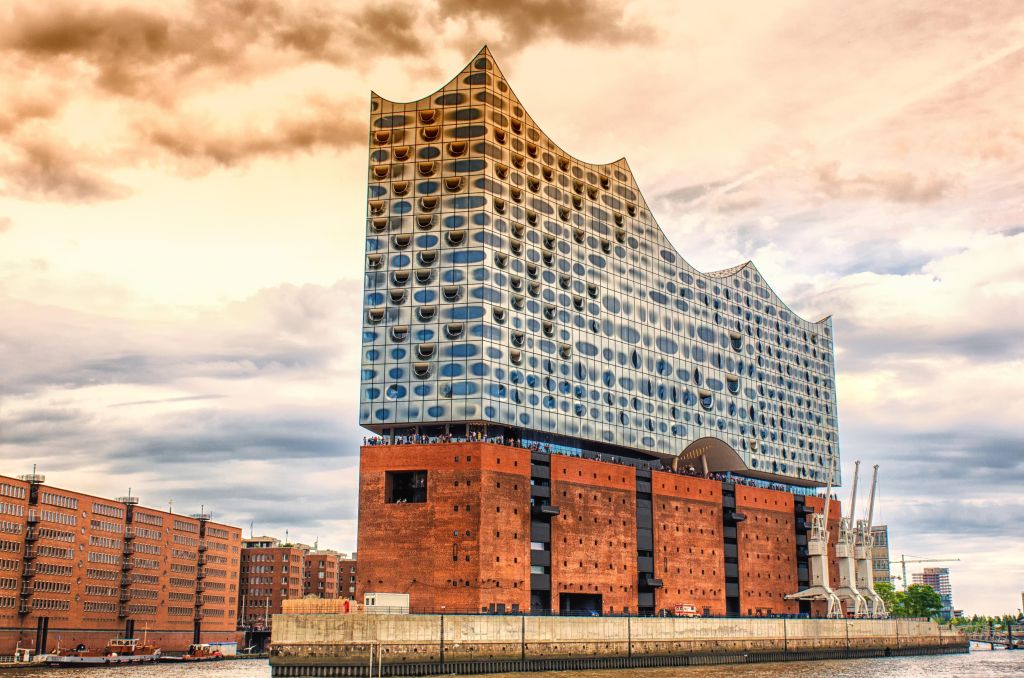
One of the most impressive contemporary buildings architecturally in the city is the Elpphilharmonie, the new symphonic concert hall here in Hamburg. It is located in the modern Hafencity area and is a bekon of Hamburg’s intent to be known internationally in the music world over. It is an amazing building not only from the outside but also on the inside and offers a wonderful 360 degree view of the harbour and city 37 meters above ground. You can go spontaneously to the front desk to get a ticket to visit the Plaza for free. Opening hours are from 12 p.m. till 12 a.m. and there are also nice cafes, a restaurant and Craft beer bar to have a nice bite to eat or drink while visiting the plaza.

A Nice Stroll along the Elbpromenade

After a nice visit to the Elbphilharmonie, one can take a nice stroll along the waterfront on the Elbpromenade. Not only will you see the historic harbour and the many historical ships along the way but will also get to see the historic Landungsbrücken, where millions of immigrants left on their journeys to the New-World.

Some of the beautiful museum ships that you will see along the way are for example, the fire–ship, a wonderful little lighthouse boat that served off the coast of England for decades. Today it has been turned into a restaurant, hotel and event location for jazz combos. Which is also a great way to get some free music while enjoying a nice house beer or drink.

The Cap San Diego is also a wonderful freight ship from 1962 that is housed along the promenade. The Swan of the sees sailed for several decades between Germany and South America before being forced into retirement due to the age of the containers.

If looking for a beautiful tall sailing ship, the Rickmer Rickmers is the ship to staun. This museum ship from 1896 is a testament to the Rickmer’s family, with their Grandson, as the figurehead at the front of the ship. You can also for a small fee go on board the Rickmer Rickmers and get a feeling of how the sailors lived and worked at that time.

The Old Elbe Tunnel

Once completing a nice walk along the Elbpromenade, be sure to go through the Old Elbtunnel located at the Landungsbrücken Nr. 6. This tunnel from 1911 still has its beautiful original glazed tiling which has recently been restored. From the other side of the Elbe river you will enjoy a wonderful view of the harbour, Landungsbrücken, city centre and Elbphilharmonie in the distance. You can also see all of Hamburg’s 5 main churches on the horizon!

Be sure to take the historic lifts which once took horse buggies and cars in and out of the tunnel. And if you need a snack along the way be sure to visit Captain Schwarz right next to the entrance of the tunnel for some wonderful Fischbrötchen-fish rolls!

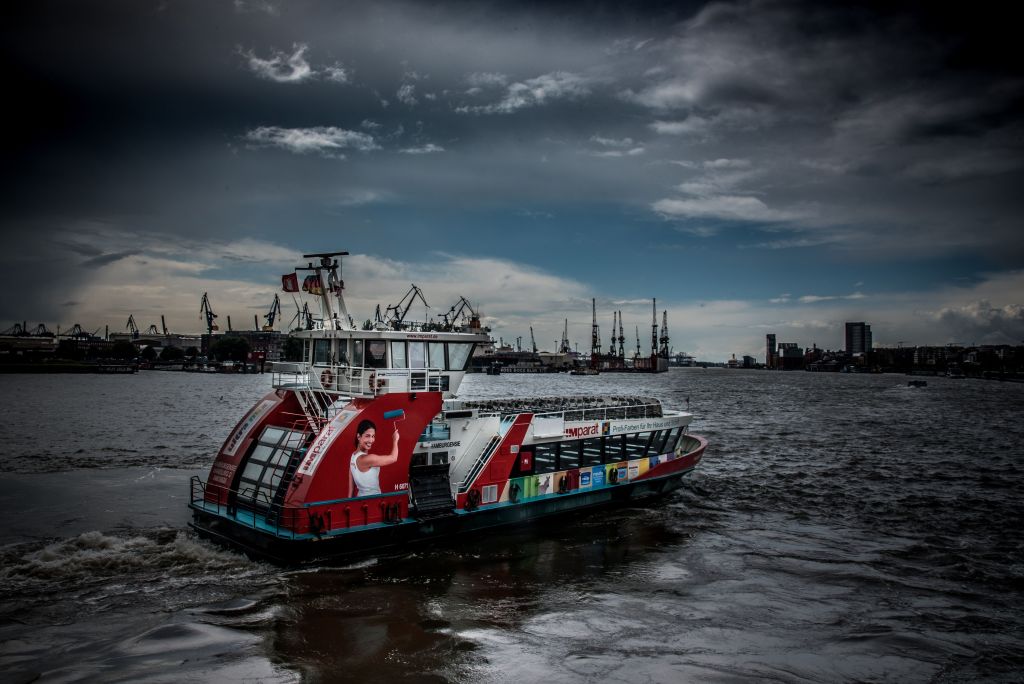
The Harbour from the Water with the Ferry 62

Although it is technically not free, many people while here buy a day ticket for the excellent public transportation system while visiting Hamburg. If you have a day ticket for the metro, be sure to take a ride on the Ferry 62, which is included in the HVV day ticket.

The ferry starts from the Landungsbrücken Nr. 3 and takes about an hour to go around the harbour and back. Along the way, you can also get off at different stops, for example, Övelgönne/Neumühlen where there is a nice museum harbour for historical boats, nice cafes and restaurants. Iif the weather is sunny and warm be sure to visit the Elbstrand, Hamburg’s most famous beach with a beach bar.

The ferry goes all the way to Finkenwerder and if that isn’t enough for you, quickly change Ferries on to the 63 for a quick trip to Teufelsbrücke (devil’s bridge). There you can enjoy some nice chips or a sausage on the docks at the Engel (Angel) kiosk or maybe even enjoy a nice walk through the idyllic Jenisch park.

Enjoy the Water Fountain Show in the Planten un Blomen Parks

The newly renovated water fountain show located in the Planten un Blomen is a must see for everyone looking for something very special! It is a mix between water jets shooting water 36 meters into the air and a light show of 566 LED light projectors choreographed to the music of Copeland, Tchaikovsky, Dvorak and other famous composers. The shows start every day at 2 p.m., 4 p.m. and 6 p.m. at the Parksee located in the north of Planten un Blomen. Not much to say other than to visit it if you do have the chance!

Visit the 5 Main Churches of Hamburg

Of course, Europe and Hamburg are really known for the abundance of medieval churches that seem to be every few hundreds of meters apart from each other… Sometimes, one can definitely get a little bit church-out from all the historically important churches. Here, though, are the main churches in order of beauty to visit while here in the city:

    The St. Michealis Church: the largest and main church here in the city. One of the best examples of baroque architecture in Germany. It is wonderfully decorated with gold, marble, and ornamentations. Also, every day at 12 o’clock they have their sermons with live concerts of their many different types of organs free of charge. Of course, they do ask for donations for the upkeep and maintenance of the church, so if you do decide to give a Euro or two, they are very grateful for that.

    The St. Petri Church: The oldest still standing church here in the city. Originally built in 1195 it is a testament to the gothic styles and still has many reliques, paintings, and artifacts inside. During the Nepolianic wars, Napoleon Bonapart use this church as a horse stable for his infantry. Can you discover the mineral sediments on the walls of the church where the horses peed? Also, for a small fee you can climb the 544 steps to enjoy the highest look-out point in Hamburg 123 meters above the ground. Opening hours for the steeple is from 10 a.m. till 4:30 p.m.

    St. Katherinen Church: this small but impressive church was recently renovated so it is also definitely worth a visit. It also has the oldest still standing structured wall in the city. There are many concerts here of the organ which dates back to 1543 and many famous musicians have performed on it including Georg Philip Telemann and Johann Sebastian Bach. So it is a great way to hear how music sounded back then at that time. Also, the golden spire is, according to legend, the gold of Germany’s most famous pirate, Klaus Störtebeker!

    St. Jakobi Church: This church is mostly known for its organ… the largest baroque organ in the world. But there are also many paintings and sculptures inside which are of significance. It is a famous pilgrimage church that many pilgrims visited on their way to Santiago de Compostela located along the oldest paved street in Germany. Johann Sebastian Bach actually auditioned for the position of organist and music director here, but turned it down when he realized that the congregation wanted him to pay for the honor of playing their organ!

    St. Nikolai Church/Memorial site: The ruins of this church today are what is left over from the church after the Operation Gomorrah bombings during the Second World War. Today this somber site is a memorial against the horrors of war and persecution. It is a reminder of what might come if we let brutal dictators rule over us and the consequences of tyranny. In the crypt there is an excellent exhibition that only cost a few Euros about the bombings of Hamburg and also the Nazi bombings, for example, the bombings of Coventry, London, Rotterdamm, Warsaw and many other cities. Every Thursday at 12 p.m. there is also a live concert of the corellian (the bells) that takes about 45 minutes and is free of charge.

Public Parks in the City

There are many beautiful parks in Hamburg to enjoy a nice stroll through. One of them is the Planten un Blomen (Plants and Flowers) located where once the city walls defending the inner city used to be. There are many different types of flowers, trees, lawns, streams, playgrounds and activities to enjoy at this park. Be sure to walk through the largest Japanese Gardens in Europe here with their Minka houses and ponds filled with koi fish large and small. Here they also have sushi courses or tea ceremonies. Also, there are live concerts and workshops taking place at the Planten un Blomen almost on a daily basis. In winter you can also enjoy Europe’s largest outdoor ice skating rink, or in summer they turn it into a skating rink. Or how about a round of minigolf?

The Stadtpark (City Park) located north of the alster lakes is also a nice place to take a jog or enjoy a nice picnic. Many people flock to the Stadtpark on the weekends if the weather is permitting to bbq on the large lawn. But be sure to visit the rose gardens and the planetarium which was once a large water tower for the city. You can also go up the planetarium to enjoy a nice view of the park with the city in the background 70 meters above ground. Many open air concerts take place there and for a small price you can also go for a nice swim or stand up paddle on the lake there.

The Volkspark is the largest park here in the city and although most Hamburgers don’t know it too well, it also has a lot to offer. There are many forests to hike through with little hills and unexpected path crossings but also amazing cultivated gardens. Be sure to visit the Dahlia gardens, the largest Dahlia collection in the world. Or the wonderfully pruned rose garden. Also worth a visit is the geometrical Tutenberg arena in the parks. A wonderful place to study, relax or practice some acting for the next school play!

Although the Ohlsdorfer Cemetery isn’t technically a park, it is still a great place to visit if looking for peace and quiet in an idyllic surrounding. In fact, it is the world’s largest cemetery garden. It is a great place to have a nice bike ride or walk around and also discover many famous former people from the city. It is still in use as a cemetary so one is asked to be respectful of the graves there.

Discovering the Street Art in St.Pauli and the Schanzen Quarter

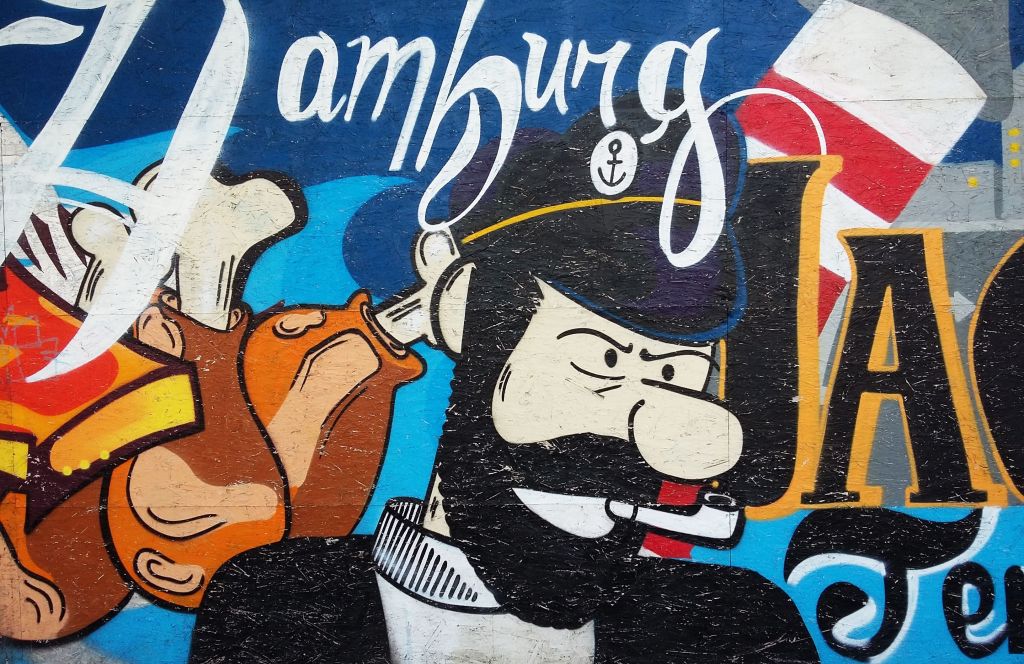
Always changing, always fresh is the paint on the walls in St.Pauli, Hamburg’s alternative district. Even as a local, there are always new provocative, rebellious and thought provoking pictures graffitied everywhere here. In fact, St.Pauli is visited by some of the most famous street artists from around the world. It is a wonderful place to discover the artwork of inner courtyards, small alleyways, abandoned buildings, and bustling boulevards. Every corner you turn there is a new piece of art revealing the next… truly an impossible feat to justly document, but maybe just to enjoy for the moment and reflect on while constantly discovering the public underground scenes.

Live Music Bars and Clubs

You can find a lot of live music in Hamburg. Sometimes you have to pay for it, sometimes you can get in for free. Some places where you can enjoy free entry are on the Hans-Albers-Platz at the Academy, Drafthouse and Molly Malon. The good thing about these places are, if you don’t like one place you can just go next door, or even two doors down. The prices are also average prices. 

Go down the Reeperbahn a few meters to the Lehmitz bar. Here you can listen to some local St.Pauli rock. A lot of the times it is so packed here that the band members actually have to play on the bar counter. The drinks are very well priced here so it is a lively place to listen to some good local bands.

If looking for jazz clubs, Every Thursday at 8:30 p.m. you can enjoy the open mic improv sessions for free. It can get very crowded so it is recommended to be there when they open at 7 o’clock to get some places for the gig.

Also not to be forgotten is the Haus 73 located in the Schulterblatt. They regularly have concerts and events free of charge to go along with their excellent craft beers.

The Altona Fish Market

The fish market starts every Sunday at 5:00 am and goes till 9:30 am. If here on a Sunday, absolutely try to make it to the fish market. A lot of people in fact go out Saturday evening to the Reeperbahn and party the whole night through. When the sun starts to rise in the morning they go to the fish market and the partying keeps going. Here you can listen to live music, get a nice Fish-roll for breakfast as well as your morning beer… yes, that is a thing here in Germany!

Here you can find hundreds of stands of people trying to sell you stuff. A lot of times they will be throwing fish, bananas, or smoked eels through the air. You can find typical market things here, for example, fruits, vegetables, flowers, clothing, souvenirs but also very strange and odd things as well like live chickens, pet ferrets or rabbits but also sometimes things like used denters… Oh course, you can try them out before buying them to make sure they fit properly!

The main thing the Fish market is known for though are the Market yellers! People yelling into the market doing whatever possible so you will buy their stuff. With their salty and humorous sayings it is like a show every 10 meters!

Neuengamme Concentration Camp Memorial Site

In the south of the city, you can also visit for free the former concentration camp, Neuengamme. It was a forced labor camp used by the SS in Germany’s dark Nazi past with around 500,000 forced laborers working there and around 50,000 people who were murdered there.

Start off with seeing some of the original livestock train wagons that brought the prisoners to the camp. Sometimes in the middle of winter in the open and how groups of 50 persons were cramped into these small waggons for sometimes there days long journey without even room to sit. Also visit the work rooms and hear of the dangerous and strenuous work conditions forced on the people with little or no protection or the gas chambers where many were executed with zyklon B gas.

There is an excellent museum building where you can learn about some of the forced laborers and their horrible conditions they had to live in.

For any WWII historian, this is a must do place to visit explaining in incredible detail this morbid and dark history and the perversions of such a destructive, oppressive, murderous regime under Adolf Hitler and the Nazis. It is a massive memorial site so do plan a good day or so to visit it.

You can reach the Neuengamme Concentration Camp Memorial by first taking the S21 to “Bergedorf”. From Bergedorf take either the bus 127 or 227 to “Neuengamme Gedenkstätte” ( www.kz-gedenkstaette-neuengamme.de/en/ )

Free Concerts at the Hamburg Hochschule for Music and Theater

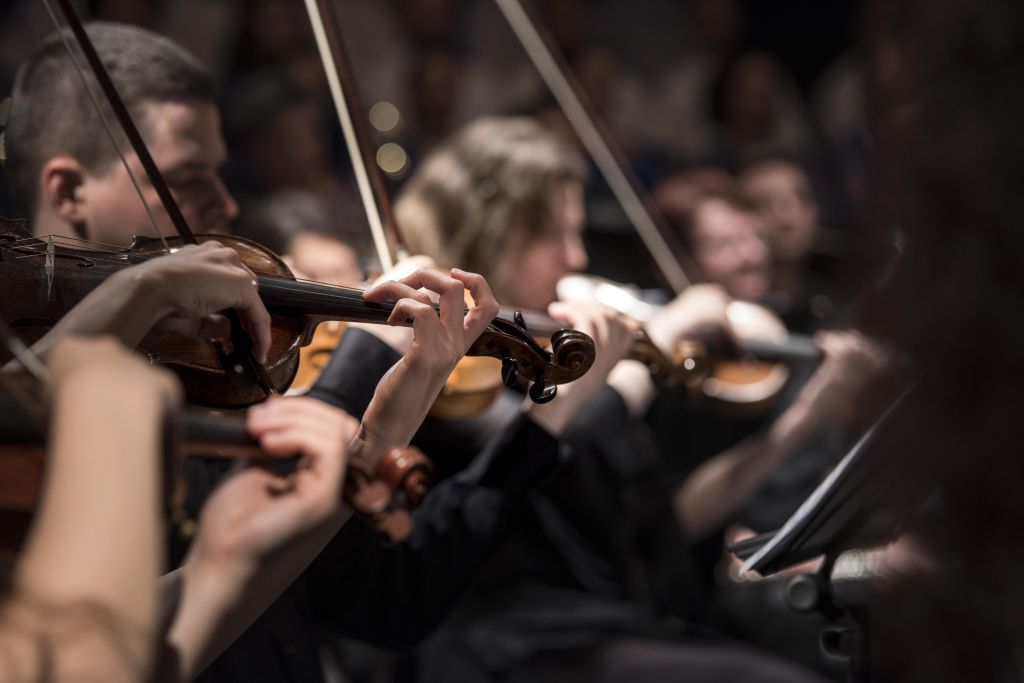
For all classical or jazz music lovers, a hidden secret here in the city are the free recitals and concerts performed by the music students at the Hamburg Hochschule for Music and Theater located directly on the beautiful outer alster lakes (Harvestehuder Weg 12). With recitals playing almost every day, one can listen to an array of solo instrumentalists and vocalists displaying their skills in recitals. But there are also symphony concerts, operas, jazz combos and bands showing off these students’ hard diligence and practice. 

Also, enjoy the wonderful concert halls, sometimes historic as in their Budget Palais and sometimes new and modern as in their new jazz hall. It is a wonderful mix of old and new halls to showcase the best of these up and coming musicians!

You can find the schedule of concerts at:

www.hfmt-hamburg.de/veranstaltungen

This blog was written by Brent Foster, a tour guide and manager of Robin and the Tourguides. Visit our website for great tours of the city! www.robinandthetourguides.de

Robin and the Tourguides is a member of Free Tour Community. If looking for great free tours for your next trip somewhere in the world, visit www.freetourcommunity.com for some of the best independent companies that have an emphasis on fair conditions for their workers and partners!